Last month, Cornell student Austin Franco made his feelings incredibly clear. After applying for a summer job through Cornell’s Handshake platform, Franco turned down an interview with a Jewish-owned startup by writing: “Not interested in working for a jew. Thanks.” Cornell condemned the message, referred the case to its Office of Civil Rights and announced an investigation. But now Franco says he is going back to campus without facing any punishment. He also claims the controversy helped him raise around $25,000 in donations.
Apparently, refusing to work for Jews is not necessarily a career-ending scandal anymore. At Cornell, it might actually be profitable.
What Did Austin Franco Say in the New Recording?
Franco’s latest comments came during an undercover conversation recorded by Accuracy in Media, with the investigator reportedly pretending to be sympathetic to him. During the conversation, Franco claimed Cornell had not taken any action against him. “As of now, they said there’s not anything going on on their back end,” he said. He suggested the university could not punish him because his original message supposedly did not qualify as hateful. That is certainly one way to describe “Not interested in working for a Jew.”
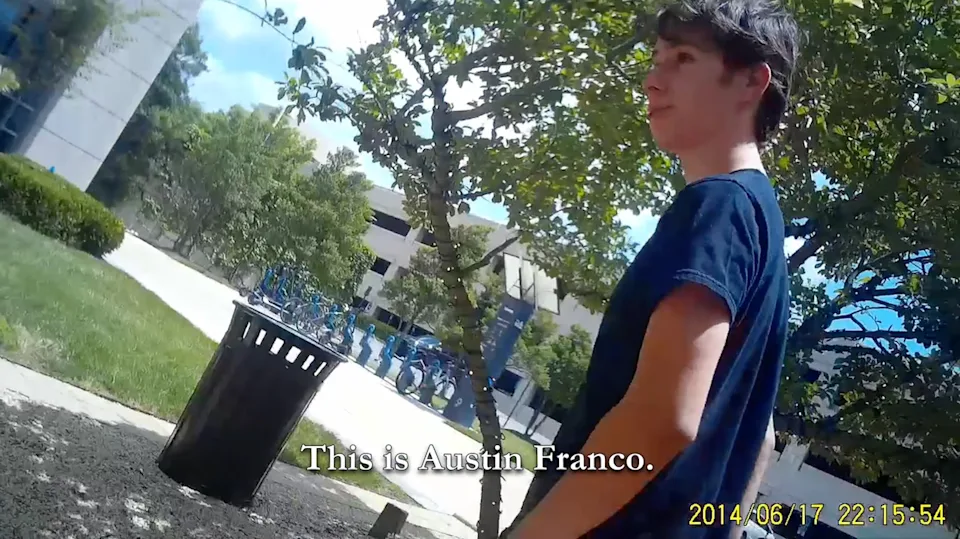
Franco also confirmed that supporters had sent him roughly $25,000 after the story blew up. He admitted that his wording may not have been “the smartest thing to say,” but complained that the backlash was over the top. So apparently the main issue was not refusing to work for someone because he was Jewish. It was getting caught saying it out loud.
Cornell Says the Investigation Is Still Open
Cornell has not confirmed Franco’s claim that he was cleared or that he will return without consequences. A university spokesperson pointed reporters back to Cornell’s original statement, saying the incident had been referred to the Office of Civil Rights for investigation. “Cornell condemns antisemitism and all forms of hatred and discrimination in the strongest possible terms,” the statement said. Very strong words. But the original incident happened on June 8th.
And yet more than a month later, Franco was apparently comfortable telling a stranger that nothing was happening and that he expected to return to campus. Maybe Cornell is still investigating. But when the student at the center of the case seems convinced that the whole thing is over, the university has a problem. At best, Cornell has failed to communicate. At worst, Franco is right.
This Was Not An Off-Hand Comment
Cornell’s response also cannot be separated from what Franco said after the message became public. He did not claim his account was hacked. He did not say the comment was taken out of context. He told the Cornell Daily Sun that he identified the company’s founders as Jewish through their names, LinkedIn pages and “physiognomy,” the discredited idea that someone’s character or identity can be judged through facial features. He also defended himself by saying his experiences with Jewish people had generally been unpleasant.

So no, this was not an awkward joke or a typo. Franco applied for the job, figured out the founders were Jewish and then openly said their Jewish identity was the reason he did not want the interview.
Cornell’s Investigation Is Now Part of the Story
Our original piece argued that Franco’s message did not come out of nowhere. For years, universities have treated increasingly aggressive anti-Jewish rhetoric like an abstract classroom debate. Students were told that “globalize the intifada” was just political speech, that excluding Zionists was not necessarily discrimination and that hostility toward Israelis had nothing to do with hostility toward Jews. Then someone skipped the slogans and just said exactly what he meant. “Not interested in working for a Jew.”
The latest update makes the story even worse. Franco now claims Cornell gave him no meaningful punishment, that he is returning to campus and that the controversy earned him approximately $25,000.
Cornell may eventually announce a different outcome. The university has not released its findings, and Franco’s version should not be treated as an official disciplinary decision. But Cornell’s silence is doing plenty of talking. A student publicly rejected a professional opportunity because the employers were Jewish. Weeks later, he reportedly believes he beat the investigation, raised thousands of dollars and can return to Ivy League life like nothing happened.
Cornell can keep publishing statements about its commitment to inclusion. Franco seems to have learned a much simpler lesson: say what you want about Jews, wait for the outrage to die down and count the donations on your way back to campus.