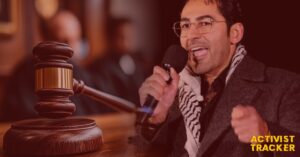
Mahmoud Khalil is suing Columbia University. If we’ve been paying attention to the last two years of campus politics, we know this is exactly where we were always headed.
On September 13th, Khalil, the Palestinian green-card holder and former Columbia grad student whose arrest by ICE agents in March 2025 turned him into a household name, filed a federal civil rights lawsuit against his alma mater. The suit, filed alongside the SIPA Palestine Working Group and its president Mohammad Zubairi, alleges that Columbia violated Title VI through “deliberate indifference” to pervasive harassment targeting pro-Palestinian students based on their perceived Arab or Muslim ancestry.
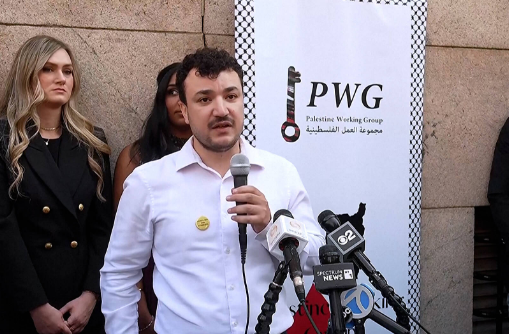
Columbia, the suit claims, “refused to correct disinformation” while Khalil was detained, “allowing a false narrative about his conduct and role to persist and further enabling peer-on-peer harassment” . Instead of investigating reports of harassment, the university characterized pro-Palestinian events as “security risks” and revised disciplinary policies to target criticism of Israel.
Here’s the part that matters for those of us who care about what’s happening on campuses. Khalil’s lawsuit isn’t just about Columbia. It’s about a legal theory: that a university’s failure to protect one group of students can constitute discrimination against that group, even when the university claims it’s acting to protect another.
And Columbia isn’t alone. The landscape of campus antisemitism litigation and Title VI enforcement now spans from the Ivy League to public universities, with federal agencies, private litigants, and student governments all playing a role.
Penn and the List of Jews
If Khalil’s lawsuit represents one direction of Title VI enforcement, the University of Pennsylvania represents the other, and the stakes couldn’t be higher.
In July of 2025, the Equal Employment Opportunity Commission issued a subpoena to Penn seeking the names and contact information of employees “aligned with the Penn Jewish community,” including members of Jewish organizations on campus and the Jewish studies program . The EEOC argued this information was necessary to identify potential victims and witnesses of antisemitic harassment.
Penn refused. A federal judge ordered compliance in March 2026. Penn appealed, and the case became a national flashpoint. The school’s own employees, including professor Huda Fakhreddine, even sued it over the lawsuit (although Huda Fakhreddine cheered on October 7th and hosted Palestine Writes with the pretty-clearly-antisemitic Susan Abulhawa, so do with that what you will).
The university’s argument was stark: “The University does not maintain employee lists by religion,” a spokesperson said. “Requiring Penn to create lists of Jewish faculty and staff, and to provide personal contact information, raises serious privacy and First Amendment concerns” . Jewish groups on campus, including Penn Hillel, also objected to the demand. Rabbi Gabe Greenberg, Penn Hillel’s director, said that while campus antisemitism requires “urgent, sustained action,” demanding “lists of Jews” was “a fundamentally incorrect and inappropriate way to address it” .
Judge Gerald Pappert wasn’t moved. He wrote that Penn and its allies “significantly raised the dispute’s temperature by impliedly and even expressly comparing the EEOC’s efforts to protect Jewish employees from antisemitism to the Holocaust and the Nazis’ compilation of ‘lists of Jews'” . He called the comparison “unfortunate and inappropriate”.
Then, in July 2026, the EEOC abruptly dropped the subpoena. Penn said none of the personal contact information had been disclosed and that it remained committed to fighting antisemitism . But the EEOC’s broader investigation into Penn continues.
What makes Penn so significant is the symmetry. The federal government is using Title VI to investigate antisemitism on campus, a necessary and overdue step given the wave of harassment Jewish students have faced since October 2023. Penn is resisting on privacy and First Amendment grounds. It’s a genuine dilemma with no easy answer.
The Campus-Level Battlegrounds
While the federal legal battles unfold, campus-level controversies keep shaping the environment. And by “shape the environment,” we mean “make everyone involved look as petty and performative as possible.”
At UC Irvine, where faculty like Osman Umarji have called Zionists “blood-thirsty animals,” the student government passed a Holocaust Remembrance Day resolution in January 2026 after stripping it of Jewish student authorship, all campus Jewish organizational endorsements, references to modern antisemitism and Holocaust denial, and links to educational resources like the U.S. Holocaust Memorial Museum and Yad Vashem . The final vote was 22-0.
“Holocaust Remembrance Day is not political,” read a joint statement from Hillel at UCI, Chabad, and Alpha Epsilon Pi. “It is moral, educational, and a reminder of a time that should never be repeated. ASUCI’s decision to delay and dilute legislation recognizing International Holocaust Remembrance Day erased Jewish student authorship, removed essential educational resources, and ignored the voices of all campus Jewish organizations”.
One student put it more bluntly: “It reveals the continuous choice ASUCI members make to distort truth and marginalize the very communities they claim to represent”.
At Rutgers – where professor Sahar Aziz‘s Center for Security, Race and Rights has been pushing extreme anti-Israel programming that has even leaned into antisemitic Holocaust inversion – the university canceled a graduation speaker, biotech CEO Rami Elghandour, after some students objected to his social media posts criticizing Israel . The university said the decision “keeps the focus on our engineering students” and ensured “no graduate feels forced to choose between their personal convictions and a convocation ceremony”. Elghandour disagreed: “I feel like they made a huge mistake and it’s a disservice to the students and the country”. The Rutgers University Senate subsequently voted to censure the engineering dean for what it called “one-sided, opaque, and harmful” handling of the matter.
At the University of Chicago, the past year has been defined less by a single incident than by a broader tension. The university ranked first nationally in FIRE’s free speech rankings with a B-minus grade, yet the same survey found the Israeli-Palestinian conflict is the most difficult topic to discuss on campus, with 50% of students reluctant to broach it. Meanwhile, a UChicago professor’s radical activism became a flashpoint, with video resurfacing of Eman Abdelhadi saying “F*** the University of Chicago, it’s evil” while explaining she stays because it’s where she can “build power” for Palestine.
So to summarize: the most free-speech-friendly campus in America is also the one where half the students are afraid to talk about the Middle East, and one of its professors is openly calling the institution evil while collecting a paycheck from it. Inspiring stuff.
What This Means
For universities, the Title VI trap is now inescapable. Protect Jewish students too aggressively, and they face claims of suppressing pro-Palestinian speech. Protect pro-Palestinian students too aggressively, and they face federal investigations and funding cuts. Do nothing, and they face lawsuits from both sides. It’s a lose-lose-lose, which is impressive in its own way.
For students, the stakes are existential: Jewish students at UC Irvine watch their own student government erase them from a Holocaust remembrance resolution.
And for the rest of us, the question is whether Title VI, a statute designed to ensure equal access to education, can survive being weaponized by everyone against everyone. The federal government is right to investigate the epidemic of antisemitism that’s swept across campuses since October 2023. Universities that allowed hostile environments to fester should be held accountable.
The lawsuits will take years. The investigations will grind on. The campuses will remain contested ground. What’s already clear is that the era of universities pretending these conflicts could be managed through statements and task forces is over. The law has arrived. And it’s not neutral.
It is, however, extremely revealing to watch, because every Title VI filing, every subpoena, and every student government resolution tells us something about what these institutions actually value when the pressure’s on.