Who Is Eve Tuck?
Eve Tuck is one of the most influential ‘decolonization’ scholars in America. In 2023, NYU gave her even more influence by putting her in charge of a new Indigenous Studies center. A few days after October 7th, Tuck was posting that describing the Hamas attack as “unprovoked” was “dishonest” and defending narratives of Palestinian “resistance.”
She later clarified that she condemned Hamas and wanted the hostages released.
But by then, many people had already noticed where her attention was focused. And with Tuck’s position, her ideas don’t stay confined to academic journals. They reshape the conversations, activism, and academic programs found on college campuses across the country – starting at NYU.
How Did Eve Tuck Respond to October 7th?
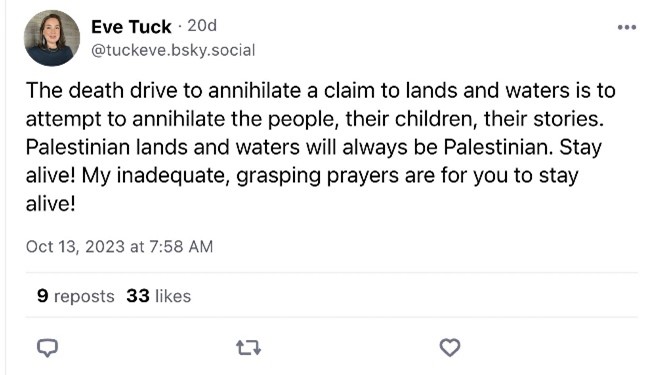
Tuck’s public reaction to October 7th quickly attracted criticism. While much of the world was focused on Hamas’s massacre of Israeli civilians, her posts focused on resistance, colonialism, and challenging descriptions of the attack as “unprovoked.”
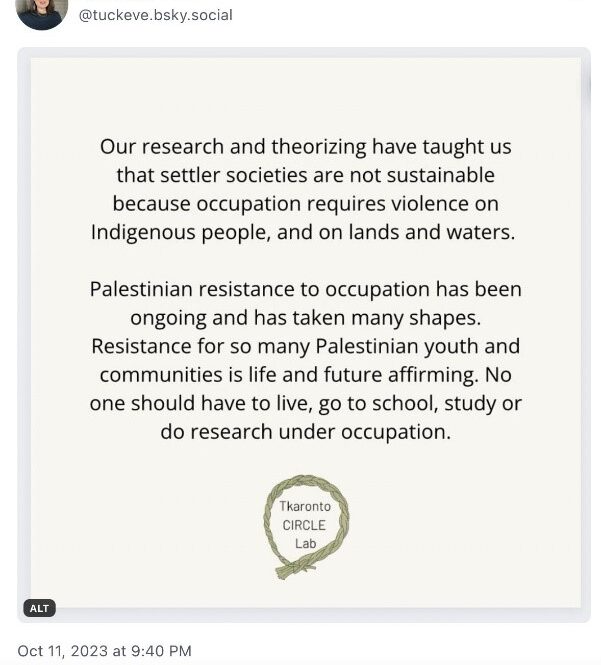
- October 11th, 2023 – on Bluesky, she called October 7th “Palestinian resistance to occupation.”
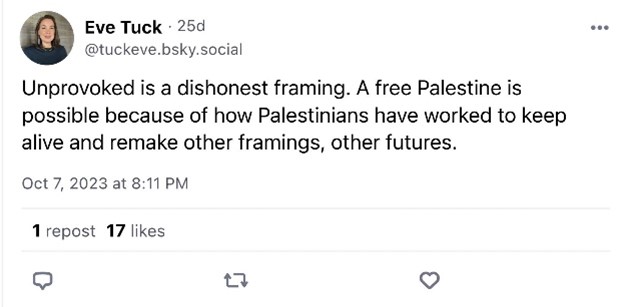
- October 7th, 2023 – on the day of the massacre, she wrote that describing the attack as “unprovoked” was “a dishonest framing.”
If your professor is having to issue public statements through their employer based on comments they made on social media, then it’s not just free speech anymore – it’s intersecting with their formal role in education.
What Does Eve Tuck Have To Do With “Decolonization Is Not a Metaphor”?
Tuck is best known academically for co-authoring “Decolonization Is Not a Metaphor” with K. Wayne Yang of UC San Diego in 2012. The paper argues that decolonization specifically refers to the return of Indigenous land rather than serving as a catch-all term for activism. More than a decade later, the paper found a new audience after October 7th, as activists and academics increasingly used the language of “decolonization” while defending or celebrating the attack as an anti-colonial action.
Purposeful or not, Tuck’s work became part of the intellectual backdrop for some of the most controversial campus reactions to October 7th.
Conclusion: What Do Eve Tuck’s Presence and Promotion Mean for America?
In 2023, NYU selected Eve Tuck to lead a new Indigenous Studies center, giving one of the country’s most influential decolonization scholars an even bigger platform. Under normal circumstances, that appointment probably wouldn’t have attracted too much attention. But then came October 7th.
Tuck’s public comments after the Hamas attack, combined with the renewed attention surrounding “Decolonization Is Not a Metaphor”, put her in the middle of a debate over how universities responded to the massacre. While she later condemned Hamas and called for the release of hostages, her first response was less than empathetic for the 1000+ victims of the massacre.
Tuck’s posts and statements naturally raise big questions about her judgment and bias, not to mention the kind of leadership universities are rewarding. When NYU elevated a professor whose ideas became closely associated with some of the most polarizing reactions to October 7th on American campuses, did they know what they were really doing?