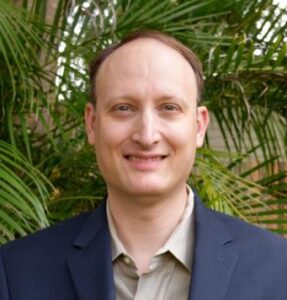
Who Is Mikael Wolfe?
Mikael Wolfe is a Jewish associate professor of history at Stanford University and a member of Faculty for Justice in Palestine (FJP), one of the faculty networks driving anti-Israel activism on American campuses after October 7th. Over the last few years, Wolfe has become a regular presence in Stanford’s activist scene. Between rally appearances, divestment advocacy, and repeated claims that Israel is committing “genocide,” he has moved well beyond academic commentary and into outright political organizing. He has also defended criticism of his classroom teaching by arguing students already hear too much of the “dominant narrative” on Israel-Palestine. Apparently balance only matters when it points one direction.
For students trying to understand why Stanford’s campus climate keeps sliding into ideological activism disguised as scholarship, Wolfe is part of the picture.
How Has Mikael Wolfe Participated in Stanford’s Anti-Israel Activism?
Wolfe’s involvement in Stanford activism has gone far beyond signing the occasional petition. He has repeatedly appeared alongside some of the university’s most aggressive anti-Israel demonstrations while defending activists accused of escalating tensions on campus.
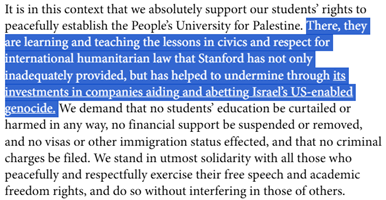
- May 2024 – His co-authored Stanford Daily article, written along with David Palumbo-Liu, argued that disciplinary actions against pro-Palestinian demonstrators against “the historic genocide unfolding before our eyes,” ignored the broader “context” of the war and unfairly targeted student activists.
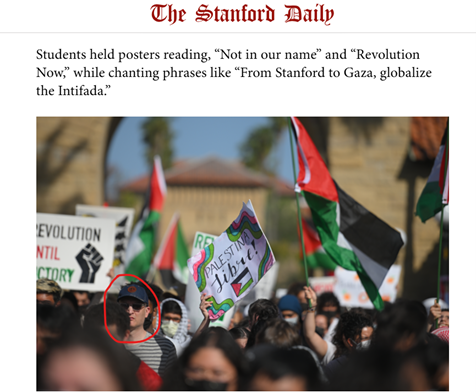
- February 2024 – When speaking at the “Hands Off Rafah” rally, Wolfe described Gaza as a “genocide,” promoted divestment from Israel, and urged Stanford leadership to negotiate with sit-in protesters. Signs at the event included slogans such as “Resistance is justified when people are occupied.”
What Has Mikael Wolfe Said About Israel and Zionism?
Wolfe’s public commentary consistently frames Israel through the language of colonialism, occupation, and genocide. The line between historian and activist gets pretty blurry here.
- November 2024 – His review of On Cuba: Reflections on 70 Years of Revolution and Struggle by Noam Chomsky and Vijay Prashad referred to the war in Gaza after October 7th as “the genocide in Gaza” occurring after “a year of momentous events.”
- March 2024 – He posted promotion of screenings of Israelism, a documentary critical of Israel and American Jewish institutions that support Zionism.
- October 2023 – His article in the Stanford Daily portrayed Zionism as a “settler-colonial” project and accused Israel of “indiscriminate bombing,” “collective punishment,” and structural violence against Palestinians. He also stated “Israel’s rule over Palestine clearly resembles South African apartheid.”
Has Mikael Wolfe Faced Concerns About Bias in the Classroom?
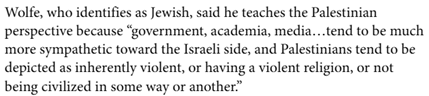
Questions about Wolfe’s objectivity are not limited to his activism. In January 2025, the Stanford Daily reported on criticism surrounding his teaching on Israel-Palestine, including complaints that course material was overly one-sided. Wolfe defended himself by not only saying that criticism against him showed that “this particular issue is really causing people to really go way out of bounds,” but by arguing that by teaching the Palestinian perspective, he was providing a counterweight to “dominant narratives” about Israel.
That explanation is becoming increasingly common among activist faculty at elite universities: political advocacy reframed as educational correction. The problem is that students are often presented with ideological conclusions first and competing viewpoints second, if at all. At Stanford, Wolfe appears increasingly comfortable operating inside that model.
What Activist Campaigns and Petitions Has Mikael Wolfe Supported?
Like many faculty activists tied to FJP-style organizing, Wolfe has also signed multiple public statements accusing Israel of war crimes and demanding institutional action against it.
These campaigns often involve the same activist ecosystem seen across campuses nationwide: FJP faculty, anti-Zionist student groups, and coordinated divestment pressure campaigns. Stanford has clearly become part of that network.
Conclusion: What Does Mikael Wolfe Mean for Stanford’s Funding?
Mikael Wolfe is not simply a professor with strong opinions about the Middle East. He is part of a growing activist faculty culture at Stanford where anti-Israel politics increasingly spill into classrooms, student organizing, and campus life. That matters because universities receiving federal funding also carry Title VI obligations to protect students from discriminatory or hostile educational environments, including antisemitism tied to shared ancestry. When faculty members legitimize movements built around slogans like “globalize the Intifada” while dismissing concerns about bias as resistance to “alternative perspectives,” universities move dangerously close to activism-first education. Stanford may eventually have to answer for where that line was crossed.