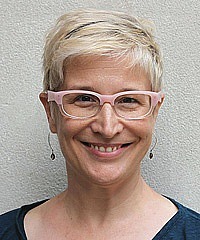
Jessica Winegar is a professor at Northwestern University, where she serves as the Harold H. and Virginia Anderson Chair and Associate Professor of Anthropology and Middle East and North African Studies. She teaches in the Middle East and North African Studies (MENA) Program and received her Ph.D. from New York University in 2003. At Northwestern, Winegar has used her academic platform to advance radical activism, consistently pushing narratives that demonize Israel while creating a hostile campus environment for Jewish students. Her writings and teaching often frame Zionism as a form of obstruction to scholarship, reinforcing one-sided perspectives in the classroom and normalizing antisemitic rhetoric under the guise of academic critique.
Promotion of Antisemitic Narratives in Academia
Winegar has long attempted to institutionalize antisemitic narratives through her involvement in professional associations. She was part of the organizing collective of Anthropologists for the Boycott of Israeli Academic Institutions, the body pushing the American Anthropological Association to boycott Israeli universities. Although the campaign failed, it demonstrated her determination to delegitimize Jewish academic participation. In her co-authored book Anthropology’s Politics — Disciplining the Middle East, she claimed that academia was obstructed by “Zionist” influences and described anthropology itself as shaped by “compulsory Zionism.” She has also argued that objectivity in anthropology is a “mythology,” signaling her belief that academia must be openly political—an approach that aligns with activism rather than scholarship.
Defending Extremism and Terror-Linked Figures
Winegar’s activism goes beyond critique and crosses into the defense of individuals tied to violence. She signed a 2014 petition defending Rasmea Odeh, a convicted terrorist responsible for a 1969 Jerusalem supermarket bombing that killed two college students. Odeh was also convicted of immigration fraud in the U.S., but Winegar and others attempted to recast her as a victim, calling her a leader in the struggle to empower women. Winegar also retweeted content supporting Bilal Kayed of the Popular Front for the Liberation of Palestine, a U.S.-designated terrorist organization. Her defense of these figures reveals her willingness to excuse violence and terrorism as part of what she frames as resistance, sending a dangerous message to students and colleagues.
Spreading Conspiracy Theories and Demonization of Israel
Winegar frequently promotes conspiracy theories about Zionist influence in academia and politics. She has written that there is “massive collusion” between American education, the media, and U.S. and Israeli policy, which she claims produces a regime of censorship. In this framing, Jewish and pro-Israel students are depicted not as participants in academic debate but as hostile agents undermining scholarship. She has praised Students for Justice in Palestine, despite their record of harassment against Jewish students, while vilifying pro-Israel students as “moles” and “coteries” who allegedly target professors. At the same time, she has embraced BDS campaigns, describing Israel as a colonial state committing “war crimes” and “genocide,” while referring to its security barrier as an “apartheid wall.” These claims mirror the rhetoric of extremist groups and have contributed to a climate of hostility on campus.
Impact on Campus Climate
Through her teaching, writings, and activism, Jessica Winegar has played a central role in legitimizing antisemitism and radicalizing campus debate at Northwestern and beyond. By portraying Israel as an apartheid state, defending convicted terrorists, and framing Jewish students as aggressors while excusing antisemitic groups like SJP, she has contributed to a hostile environment where Jewish students feel marginalized and unsafe. Winegar’s academic credibility gives undue weight to extremist rhetoric, and her continued influence raises serious concerns about whether Northwestern can maintain a safe and inclusive environment for all students.