Who Is Shayoni Mitra?
Shayoni Mitra is an assistant professor of theater at Barnard College of Columbia University. In 2024, she became a visible supporter of Columbia’s pro-Palestinian protest movement through social media posts, faculty rallies, activist events, and university-backed programming that showed an alignment with a one-sided narrative. Also a member of Columbia-Barnard Faculty and Staff for Justice in Palestine (FSJP), Shayoni Mitra is just another example of university faculty whose activism contributes to climates where Jewish, Israeli, or Zionist students can overwhelmingly feel unsafe or unwelcome.
How Did Shayoni Mitra Support Columbia’s Pro-Palestinian Protest Movement?
Mitra openly backed the Columbia encampment and other pro-Palestinian activity on campus. Her posts included the phrase “Viva Palestine,” praised the protesters, and criticized Columbia’s response. She also endorsed Cornel West, who visited the encampment and joined the demonstrations.
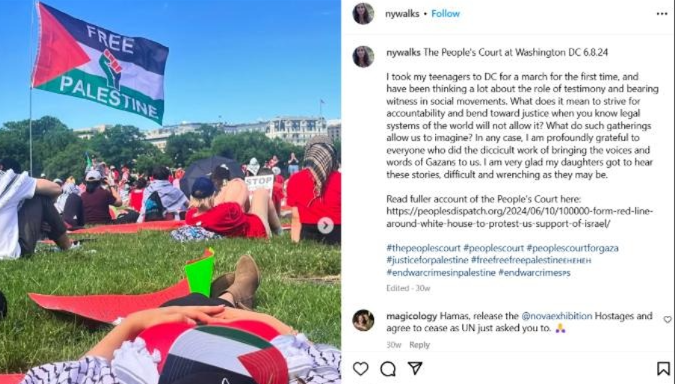
Her support didn’t stop online. On April 22nd, 2024, Mitra joined a Faculty Walkout supporting the encampment and students who had been arrested by the NYPD or suspended by Columbia. She later condemned what she called the “inhumane conditions” faced by protesters arrested at universities across New York City.
She kept supporting the movement as things escalated. Mitra posted in support of activists tied to the occupation of Hamilton Hall, which ended with police entering the building after protesters barricaded themselves inside. Her criticism focused mostly on how Columbia treated the protesters, not on the actions that led to arrests, suspensions, and police intervention.
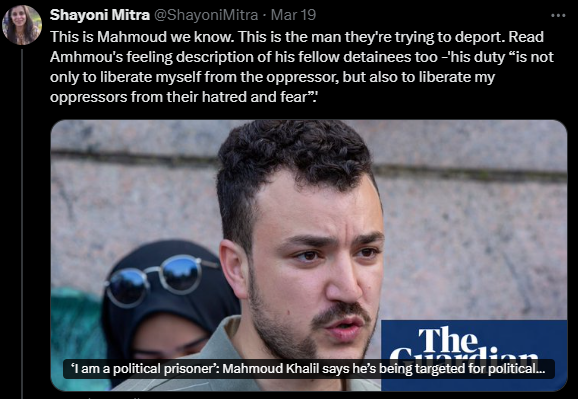
She has also been a vocal supporter of Mahmoud Khalil, a Columbia University activist who, among other things, has led repeated demonstrations that include rhetoric calling Israel a state of “genocide” and for Palestine “from the river to the sea,” a slogan widely accepted as calling for the annihilation of the state of Israel.
What Was Shayoni Mitra’s Role in the People’s Grad for Palestine?
In May 2024 and 2025, Mitra took part in and helped organize the People’s Grad for Palestine, an alternative graduation event for students involved in the pro-Palestinian protest movement. The event honored activists who had faced arrests, suspensions, or other disciplinary consequences after the encampment and related protests. By helping organize it, Mitra joined an effort to celebrate the protesters even after the movement had caused major disruption and escalated into the unlawful occupation of Hamilton Hall.
How Has Shayoni Mitra Used Arts Programming to Promote Palestinian Advocacy?
Mitra also brought her activism into Columbia-linked cultural programming by helping organize “Remembering Refaat: Palestine & the Poetic Imagination” through Columbia University’s Middle East Institute. Her work with the Palestine Poetry Collective helped shape the event around “reclaiming space for Palestinian voices” and presenting art as a tool for “healing and resistance.” Refaat Alareer, the poet honored, famously mocked the murder of Jewish babies on October 7th.
The event also showed how closely Mitra’s academic work and activism overlap. Rather than keeping her political advocacy separate from her university role, she helped create Columbia-linked programming that treated art as part of a wider political cause.
Why Does Shayoni Mitra’s Activism Matter at Barnard and Columbia?
Mitra’s record goes beyond simply having a political opinion. Professors are allowed to have political views. But the concern starts when they repeatedly use their titles, campus groups, academic platforms, and university influence to support one activist movement while pushing back against the consequences protesters face for breaking campus rules.
Mitra was not just watching Columbia’s protest movement from the sidelines. She became a public supporter, participant, organizer, and faculty ally. For Barnard and Columbia, the bigger question is whether this is ordinary political expression or another case of a professor using academic status to give disruptive activism more credibility.










