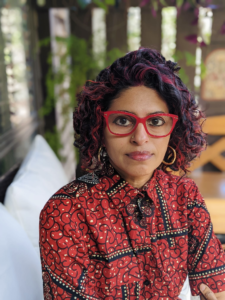
Who Is Usha Iyer?
Usha Iyer is an Associate Professor of Film and Media Studies in the Department of Art and Art History at Stanford University, and focuses on film and media cultures through gender, sexuality, race, and caste.
That’s the resume version. Her fuller picture includes repeated support for academic boycotts of Israeli institutions and public letters condemning Israel as an apartheid state. At Stanford — a federally funded university bound by nondiscrimination law — faculty activism has to remain neutral when it comes to the classroom. But Usha Iyer’s public record places her squarely within networks advocating for Israel’s academic isolation.
How Has Usha Iyer Supported Anti-Israel Petitions?
Usha Iyer has formally signed onto organized boycott efforts targeting Israeli universities and cultural institutions.
- October 2023 – just weeks after October 7th, Usha Iyer signed an Open Letter to University Administrators labeling Israel as having undertaken “decades of apartheid” and urging protection for students and faculty who publicly spoke out against “human-rights abuses in Gaza.”
- February 2023 – Usha Iyer signed a petition calling on U.S. Secretary of State Antony Blinken to reinstate James Cavallaro’s nomination to the Inter-American Commission on Human Rights, describing the withdrawal as politically motivated suppression of human-rights advocacy. Cavallaro’s commentary on Israel had previously been described by a State Department spokesman as being, “inappropriate to say the least.”
- May 2021 – signed a Stanford community letter labeling Israeli policies as apartheid, describing it as an “ethno-state” with “acts illegal under international law” and calling for support of the BDS movement. Stanford Director of Graduate Studies Sharika Thiranagama also signed the letter.
- 2016 – Iyer signed a petition by MLA Members for Justice in Palestine urging the Modern Language Association to endorse an institutional boycott of Israeli academic institutions.
- Undated – she signed a call by the U.S. Campaign for the Academic and Cultural Boycott of Israel (originally founded in 2009) supporting a boycott of Israeli academic and cultural institutions “in solidarity with the Palestinian demand for justice, equal rights, and self-determination.”
Boycotts are not abstract debates, but rather campaigns designed to cut off collaboration based on nationality and institutional affiliation. When a Stanford professor signs onto them, that choice carries weight. And consistent anti-Israel advocacy raises a question of bias on-campus.
How Has Usha Iyer Used Campus Programming and Public Speech to Promote Activism?
Beyond petitions, Usha Iyer has helped shape campus programming and delivered speeches that encourage students and academics to see themselves as political actors in global struggles, including that against Zionism.
- February 2025 – she hosted Stanford’s Winter 2025 Queer Learning Initiative, which included a session by Palestinian queer artist Mama Ganuush exploring “queer survival under Zionism and Trump-era politics.”
- January 2020 – at a rally against anti-Muslim discrimination and violence, Iyer delivered a speech urging students and academics to reject complacency and called for “global solidarity” with the struggle in Palestine, among other nations, emphasizing that “every conversation counts” and encouraging activism.
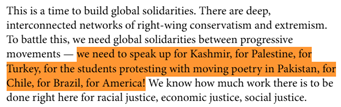
When Zionism is presented as something queer people must “survive,” and when organized resistance tied to Palestine is openly encouraged, the line between classroom exploration and political activism starts to blur.
Conclusion: What Does Usha Iyer Mean for Stanford University?
Usha Iyer’s record shows repeated support for academic boycotts of Israel, participation in BDS-aligned efforts, and involvement in campus programming that frames Zionism as oppressive. At a university subject to Title VI of the Civil Rights Act, which prohibits discrimination based on shared ancestry, including Jewish identity, that kind of sustained one-sided framing can create real campus concerns. Stanford promotes itself as a place for open inquiry. Whether that promise holds when one perspective is consistently pushed is a question worth asking.