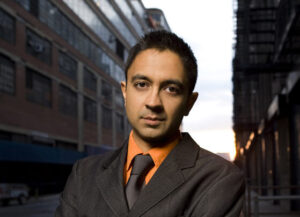
Who Is Vijay Iyer?
Vijay Iyer is a composer, pianist, and professor at Harvard University. He holds several influential roles on campus: Franklin D. and Florence Rosenblatt Professor of the Arts, professor of African and African American Studies, and a Director of Graduate Studies as well as a graduate advisor in creative practice and critical inquiry. But his resume also includes being a founding member of Harvard’s Faculty for Justice in Palestine (FJP) as well as signing petitions and statements and participating in encampments and organized efforts as part of pro-Palestinian activism.
For a professor at one of the country’s most influential universities, that level of sustained bias and involvement raises serious questions about how graduate education under Vijay Iyer’s direction will be guided.
Why Did Vijay Iyer’s Appointment to the Pulitzer Board Raise Concerns?
In January 2026, Vijay Iyer was appointed to the Pulitzer Prize Board at Columbia University, the body responsible for awarding one of the most influential honors in American journalism and literature. The appointment drew particular attention because of Iyer’s own social media activity, which included conspiracy-theory leaning posts such as allusions to “the most powerful people on the planet doubling down on their evil, deranged state-sponsored terror” in November of 2023.
Additionally, Iyer’s own Harvard chapter of FJP posted, in February of 2024, a cartoon of a Jewish-labeled hand with dollar signs holding nooses around the necks of an Arab and a Black man. Harvard President Alan Garber issued a public letter condemning the post, calling it “vile and hateful.”

Elevating someone who has displayed antisemitic leanings to a role responsible for evaluating journalistic integrity and public discourse is a contentious choice at best. At worst, it suggests bias and hate is an accepted course of action on the Pulitzer Board. Indeed, Columbia itself distanced from the Pulitzer Board in the wake of Iyer’s appointment, saying, “The Pulitzer Prize Board is independent of the University and operates as such…neither the University nor any of its employees played any role in the Board’s most recent selections.”
How Has Vijay Iyer Participated in Anti-Israel Activism at Harvard?
Vijay Iyer has repeatedly joined faculty petitions and statements criticizing Israel while challenging university responses to antisemitism or campus unrest. His signatures and involvement are all taken with the added authority of his academic title.
- April 2024 – he spoke at Harvard Hall 101 as part of the “Asian-Palestinian Solidarity Panel: On the Pan-Asian Movement for a Free Palestine.”
- January 2024 – he signed a statement establishing a Harvard chapter of Faculty and Staff for Justice in Palestine, a document that was later removed from the group’s website. It cited “75 years of violent dispossession of the Palestinian people,” and the “colonial, racial violence” of the “Israeli occupation.”

- November 2023 – in a statement Iyer signed, Harvard faculty condemned Harvard’s antisemitism task force, arguing that the initiative threatened academic freedom. The statement framed scrutiny of antisemitism on campus as the real concern, saying “It cannot be ruled as ipso facto antisemitic to question the actions of this particular ethno-nationalist government.”
- October 2023 – in a Harvard faculty open letter to President Claudine Gay, Iyer urged condemnation of “free speech” intimidation of pro-Palestinian activists.
- October 2023 – he signed a letter organized by the ANSWER Coalition defending the freedom to speak in support of Palestine. The ANSWER Coalition is one of the most prominent organizers of anti-Israel demonstrations in the United States.
- May 2021 – he signed a Harvard faculty statement demanding “an end to US support for Israel’s apartheid regime, condemn Israeli state aggression, and affirm our support for the Palestinian liberation struggle.”
How Has Vijay Iyer Participated in Pro-Palestinian Activism On Campus?
Beyond petitions, Vijay Iyer has also appeared at events connected to the Gaza protest movement that spread across university campuses.
- May 2024 – Iyer expanded his circle of participation to Columbia University in an ad hoc graduation event organized by faculty and staff following police sweeps of the Gaza Solidarity Encampment and the occupation of Hamilton Hall. He played his own composition, “Kite”, dedicated to the Palestinian cause.
- April 2024 – he delivered a statement on behalf of Harvard Faculty and Staff for Justice in Palestine at a pro-Palestine encampment on-campus, speaking as a representative of the faculty activist group.

How Has Vijay Iyer Used the Arts to Promote Palestinian Advocacy?
Vijay Iyer has also used his status as an artist to advocate for Palestinian causes, proving that the Israel-Gaza conflict has increasingly become a point of interest within cultural centers connected to universities.
- May 2025 – in discussing his composition “Defiant Life,” he described it as his “musical response to the ongoing violence and oppression in Gaza.”
- February 2025 – he signed an open letter by artists calling for a ceasefire in Gaza.
- November 2023 – he signed a Musicians for Palestine letter calling for a ceasefire.
- May 2021 – Iyer signed “Free Palestine / Strike MoMA: A Call to Action“, which described the signers’ “support for the Palestinian struggle against Israeli colonial rule and its apartheid system.”
- March 2021 – he signed his name to “Palestine and Praxis: Open Letter and Call to Action.”
Conclusion: How Does Vijay Iyer Impact Harvard’s Graduate Studies?
Vijay Iyer’s activism and clear bias carry notable weight due to his role as a senior Harvard professor responsible for mentoring graduate students and influencing academic programs. As universities continue to face federal Title VI scrutiny, which can lead to cuts in federal funding, related to antisemitism and Jewish discrimination on campus, the involvement of faculty members like Vijay Iyer shows the challenge for higher education: how universities can balance political advocacy by professors with their responsibility to maintain a neutral environment where all students feel protected.