
There is a narrative being pushed by some student activists that opposing buffer zones is about free speech and civil liberties. But when you look at the context, the players, the rhetoric, and the consequences, that argument starts to look like what it really is: a cover for enabling chaos and avoiding accountability.
Opposing buffer zones is not about protecting speech. It is about weaponizing protest while pretending the fallout is accidental.
The Escalation of Campus Protests
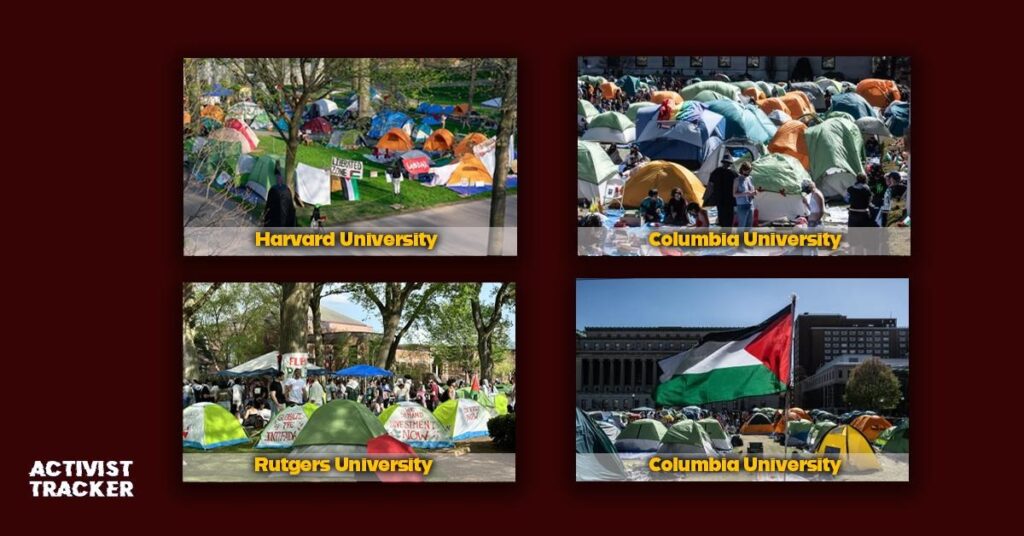
In April 2024, Columbia University became the epicenter of one of the most visible pro-Palestinian protest movements in recent campus history. Beginning April 17, students and outside activists established what they called the Gaza Solidarity Encampment. The protest occupied university grounds for nearly two weeks and ultimately ended with mass arrests after repeated policy violations.
Similar encampments appeared at universities across the country, including New York University, UCLA, and Harvard. These protests were coordinated, sustained, and increasingly confrontational. They did not stay contained within campus quads. They spilled into surrounding neighborhoods and community spaces.
The Legal Purpose of Buffer Zones
In U.S. law, restrictions on how close protesters can get to sensitive locations have existed for decades and have been shaped by major court decisions. In 1997, the U.S. Supreme Court in Schenck v. Pro-Choice Network of Western New York upheld the constitutionality of fixed buffer zones requiring demonstrators to stay a set distance from the entrances and driveways of abortion clinics in order to protect access and safety. At the same time, the Court struck down “floating buffer zones” that moved with individuals entering or leaving the clinics as being overly broad.
The legal logic behind buffer zones has always been balancing protest rights with the right of others to access spaces without harassment, obstruction, or intimidation. That logic has not disappeared. What has changed is who these protests are targeting. As political demonstrations increasingly occur near schools, synagogues, and other religious institutions, the same safeguards that are accepted in the abortion context are now being rejected by those once supporting them or similar protection.
Free Speech Is Not the Issue
If opposing buffer zones were truly about defending civil liberties, the standard would be consistent.
Buffer zones around Planned Parenthood clinics have long been defended on the grounds that patients are vulnerable and deserve safe access. That same vulnerability applies to children at religious schools and families attending worship services.
The difference is not principle. The difference is politics.
Blocking entrances, surrounding buildings, and forcing people to pass through hostile crowds is not persuasion. Courts have repeatedly recognized that this behavior crosses from expression into coercion.
Calling it activism does not change what it is.
Student Organizations Are Deliberately Rejecting Protest Boundaries
At Columbia University, Student Workers of Columbia has publicly supported protests that oppose buffer zones and similar safety restrictions. Their messaging frames protest limitations as censorship, even as tensions escalate and vulnerable communities are directly affected.
At New York University, NYU Students for Justice in Palestine promoted and encouraged signing a petition rejecting buffer zones outright. The petition framed buffer zones as an attack on political expression, without addressing the documented consequences of unrestricted protest near sensitive spaces.
These positions are not accidental. They reflect a deliberate choice to prioritize protest proximity over the safety of bystanders.

The Consequences Student Organizations Ignore
Student organizations opposing buffer zones rarely acknowledge what actually happens when boundaries disappear.
Synagogues are not abstract symbols. Many house kindergartens, preschools, and daycares. Parents drop off children there every morning. Worshippers attend services at predictable times. These are not voluntary audiences for political demonstrations.
In New York, Jewish communities have reported feeling unsafe when protests blocked entrances to synagogues during Friday night services, preventing people from entering or leaving. In one documented incident, protesters entered a synagogue while a daycare was operating at the front of the building.
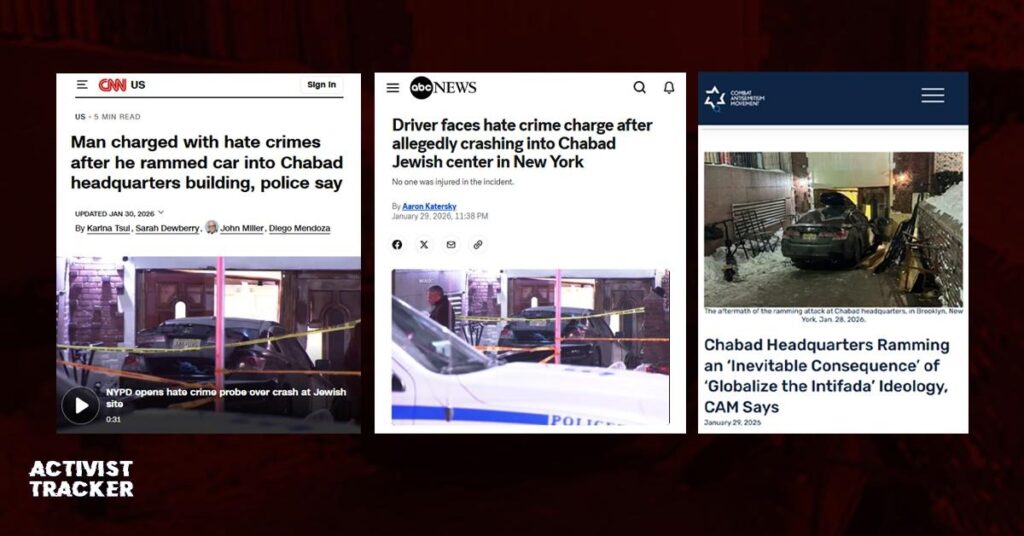
More recently, a Chabad center in Crown Heights was rammed by a motor vehicle, ripping a door off its hinges and endangering those inside. This incident is under investigation as a hate crime.
None of this was unforeseeable. This is exactly the type of escalation buffer zones were designed to prevent.
How Rejecting Buffer Zones Removes Accountability
Opposing buffer zones allows student organizations to escalate pressure while avoiding responsibility for what follows. By rejecting clear boundaries, they preserve plausible deniability. Any resulting intimidation can be dismissed as spontaneous, emotional, or outside their control, even when it is a direct product of protest design.
Removing distance changes the nature of protest itself. Proximity increases confrontation, obstruction, and psychological pressure, especially in spaces people cannot avoid like schools or places of worship. When those conditions are normalized, escalation stops being an exception and becomes a feature.
Once harm occurs, the narrative resets. Violence is treated as an anomaly rather than a foreseeable outcome. Accountability dissolves because the structures meant to prevent escalation were intentionally rejected. This is not a failure of foresight. It is a strategy that externalizes risk while internalizing none of the consequences.
What Gets Left Out of the Talking Points
Student organizations opposing buffer zones rarely address what actually happens when boundaries disappear. Their messaging stays abstract, focused on slogans about free speech, while avoiding the real-world environments their protests target and the predictable consequences of unrestricted proximity.
Synagogues are not symbolic stages. Many house kindergartens, preschools, and daycares. Parents drop off children there every morning. Worshippers attend services at fixed, predictable times. These are not voluntary audiences opting into political confrontation. When protests occur at entrances or directly outside these spaces, people cannot simply disengage. They are forced into it.
In New York, Jewish communities have repeatedly reported feeling unsafe when protests blocked access to synagogues during Friday night services, preventing people from entering or leaving. In one documented incident, protesters entered a synagogue while a daycare was operating at the front of the building. More recently, a Chabad center in Crown Heights was rammed by a motor vehicle, ripping a door off its hinges and endangering those inside. The incident remains under investigation as a hate crime.
None of this was unforeseeable. Buffer zones were created precisely to prevent this kind of escalation. Ignoring these outcomes is not an oversight. It is a refusal to acknowledge what happens when intimidation is allowed to replace boundaries.
The Bottom Line
Opposition to buffer zones is often framed as a defense of free speech, but that argument collapses under scrutiny. Buffer zones have long been accepted when applied to groups deemed vulnerable, including patients accessing medical care. The same logic applies to children at religious schools and families attending worship, yet that protection is suddenly rejected when the targets change. This is not a principled shift. It is a political one.
By ignoring what happens when boundaries disappear, student organizations avoid confronting the real consequences of their demands. Protests at synagogues and other sensitive spaces have blocked entrances, exposed children to hostile environments, and left entire communities feeling unsafe. These are not abstract risks. They are predictable outcomes of unrestricted proximity.
Blocking access, surrounding buildings, and forcing people through hostile crowds is not persuasion. It is coercion. Courts have consistently recognized that distinction. Calling it activism does not make it benign. Rejecting buffer zones does not expand rights. It removes accountability while allowing intimidation to masquerade as speech.









