
For months, Columbia University has tried to distance itself from the coalition known as Columbia University Apartheid Divest (CUAD), the network of campus organizations that helped organize the 2024 protest encampments and the occupation of Hamilton Hall.

University officials have repeatedly emphasized that CUAD is not a recognized student organization and that the university cannot control independent activism taking place among students and outside groups.
The message has been clear. The protests, building occupations, and escalating tensions associated with CUAD are not officially tied to the university.
But a growing body of reporting, campus data, and public statements from activists suggests the issue may be far more complicated. Instead of disappearing after bans and disciplinary actions, critics argue that the same activist networks may be embedding themselves deeper into the institutional structures of the university.
At the center of the debate are several overlapping issues including Columbia University antisemitism complaints, the rise of campus radicals, accusations of campus indoctrination, and the role of unions and activist coalitions in shaping campus politics.
A Surge in Discrimination Complaints
Recent reporting from Columbia’s Office of Institutional Equity (OIE) indicates that discrimination complaints at the university have increased dramatically.
According to the data, discrimination allegations rose 122 percent during the 2024–2025 academic year, a striking increase that reflects the highly polarized environment that has developed on campus since the October 2023 war in Gaza.
The same data also indicates a sharp rise in antisemitism complaints reported by students during the past academic year.
The issue of Columbia University antisemitism has been the subject of intense national scrutiny, with students, faculty members, lawmakers, and civil rights organizations raising concerns about the campus climate.
Jewish students have reported feeling increasingly isolated in classrooms, student organizations, and campus spaces as political activism surrounding the Middle East has intensified.
The surge in complaints has fueled a broader debate over whether universities are adequately addressing antisemitism or whether political activism on campus has begun to blur the line between protest and discrimination.
The Role of Campus Radical Activism
The debate surrounding campus radicals at Columbia University is not new, but the scale and coordination of recent protests have drawn renewed attention.
The coalition known as Columbia University Apartheid Divest emerged as one of the most visible organizing networks behind the campus encampments and demonstrations that took place in 2024.
The group brings together a range of student organizations advocating for divestment from Israel and other political demands tied to the Israeli Palestinian conflict.
The encampments and protests organized by CUAD drew national attention after demonstrators occupied Hamilton Hall, forcing the university to intervene and ultimately leading to arrests and disciplinary actions.
In response, Columbia University emphasized that CUAD was not an officially recognized student organization and sought to distance itself from the coalition.
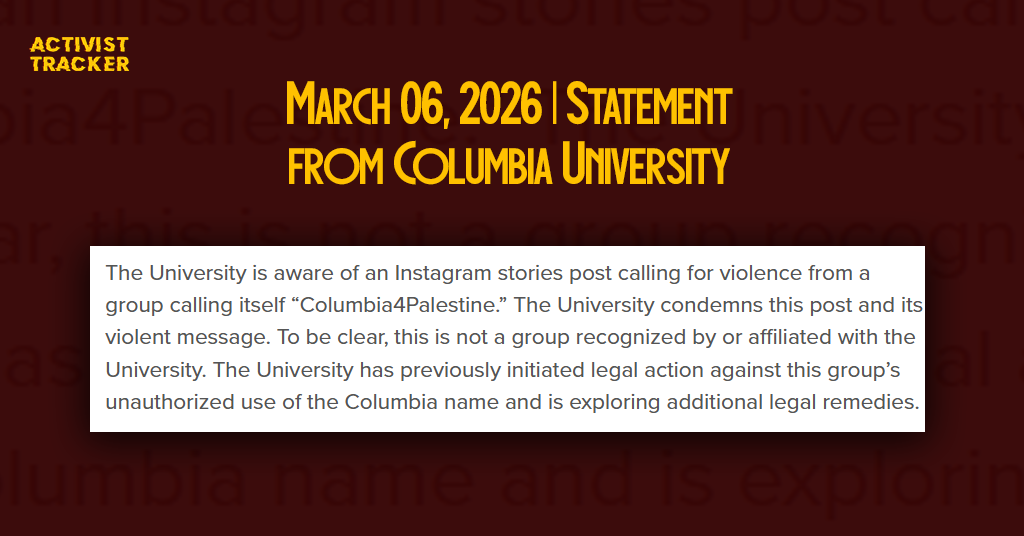
But critics argue that this distinction may overlook the broader ecosystem of activism operating on campus.
Activism Expanding Into Institutional Structures
A recent investigation published by The Free Press examined the role of Columbia’s graduate student union in the ongoing campus conflict.
The union represents approximately 3,500 graduate student workers, many of whom serve as teaching assistants, research assistants, and instructors responsible for leading undergraduate courses.
According to the reporting, the union joined the CUAD coalition and helped organize demonstrations connected to the activist network.
One controversial aspect of the strategy reportedly involved organizing protests as labor pickets, which receive stronger legal protections than ordinary student demonstrations.
Because labor picketing is protected under labor law, critics say this tactic allowed protests connected to CUAD to continue even after certain demonstrations had been restricted or banned.
In effect, the protests did not necessarily disappear. Instead, they were reorganized under a different institutional framework.
Union Resources and Activist Support
Reporting and public statements from activists also suggest that the graduate student union reimbursed certain CUAD related operational expenses, including mailing list services and event costs.
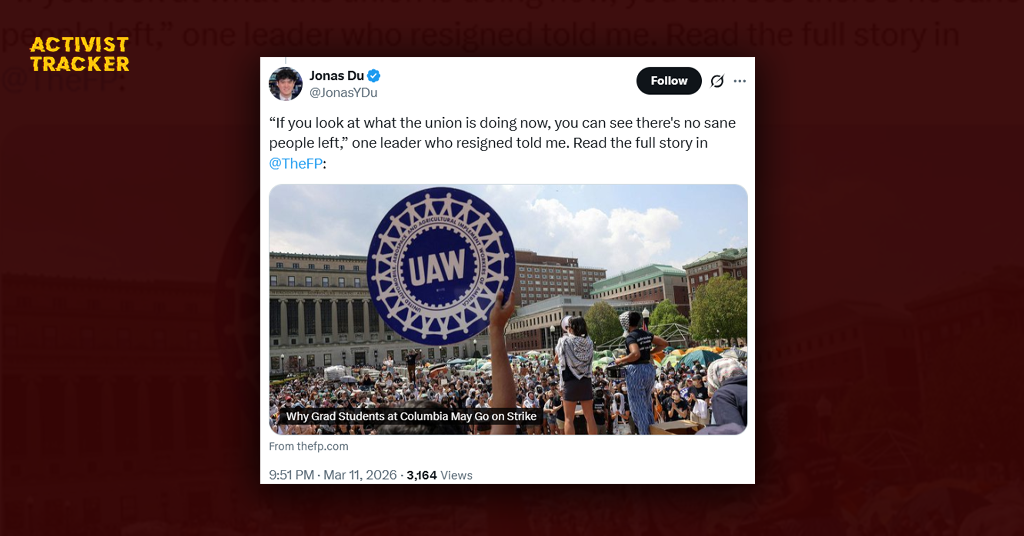
Promotional materials for anti Israel demonstrations reportedly included the union’s logo, even when CUAD itself could not formally sponsor events.
If accurate, this arrangement would mean that union infrastructure funded through dues paid by graduate workers played a role in sustaining the activist network behind the protests.
For critics, this raises broader questions about the intersection between campus radical activism and institutional power structures within universities.
Leadership Ties to the Hamilton Hall Occupation
Another development that has drawn attention involves the leadership of the graduate student union.
Union president Grant Miner was among the students expelled following the April 2024 occupation of Hamilton Hall, one of the most dramatic escalations of the protest movement.
Despite that history, Miner reportedly continues to serve as union president and receives compensation funded through union dues.
For critics concerned about campus radicalism and campus indoctrination, the overlap between protest leadership and union leadership reinforces concerns that activism has moved beyond student demonstrations and into the operational structures of the university.
Strike Threats and Escalating Tensions
The graduate student union has now authorized a strike while negotiating a new contract with Columbia University.
Among the reported demands are:
- a minimum PhD student salary exceeding $76,000
- hourly wages of $36.50 for certain employees
- childcare subsidies reaching up to $50,000 per child per year
Labor negotiations are common at major universities, but in this case the strike threat is unfolding within a broader political environment shaped by activism and ideological conflict on campus.
Columbia University and the Debate Over Campus Indoctrination
The controversy surrounding Columbia University antisemitism, campus radicals, and activist unions has also intensified a broader national conversation about campus indoctrination and political ideology within higher education.
Critics argue that activist networks within universities increasingly influence classroom discourse, faculty activism, student political culture, and institutional decision making.
Supporters of campus activism argue that universities must remain spaces for political expression and protest.
This tension between activism and institutional responsibility has become one of the defining debates in higher education today.
A Structural Problem or Isolated Incidents?
Columbia University’s leadership has often framed the controversy as a series of isolated incidents involving protests and student activism.
But the emerging picture suggests the issue may be more structural.
Activist networks tied to the protests appear to intersect with multiple parts of the university ecosystem including student organizations, coalitions, and labor unions.
At the same time, discrimination complaints have surged and concerns about Columbia University antisemitism continue to dominate national headlines.
Taken together, these developments raise a difficult question for Columbia University and for higher education more broadly.
Is the campus dealing with isolated protest movements, or with a broader ecosystem of campus radicals and activist networks that have become embedded within the institution itself?









