
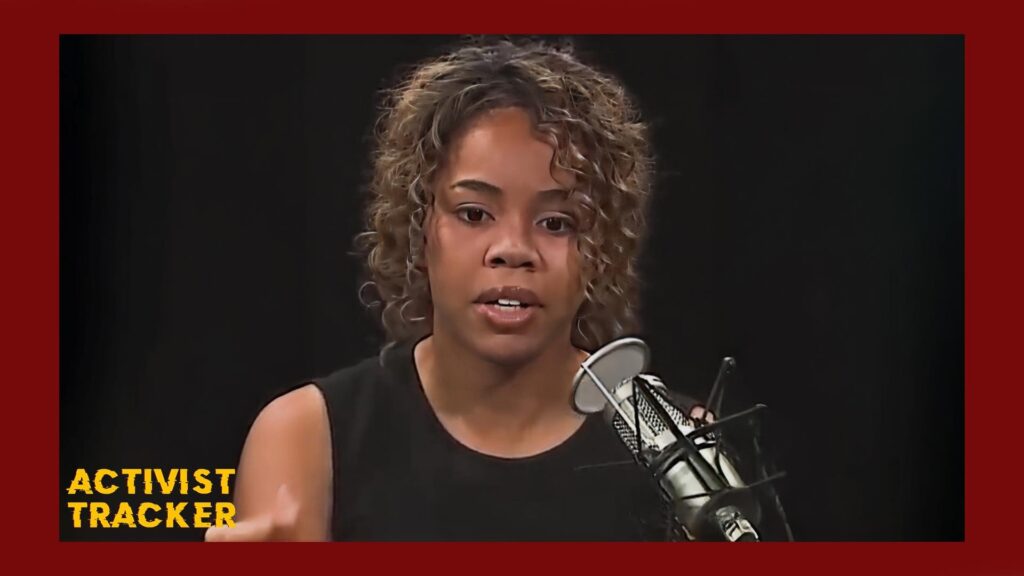
In a recent interview with The Free Press, Stanford pre-med student Taran Thomas described how she entered the post-October 7 campus movement believing she was fighting for justice, only to discover the pressure, paranoia, and silencing behind it. Her story matters because it shows how quickly young, idealistic students can be swept into a movement before they understand what they are repeating, what they are endorsing, or what they are being discouraged from seeing for themselves.
This is not a profile of someone who joined a cause. It is the story of someone who was pulled into a hive mind designed to reward conformity and punish questions.
The Pressure to Perform Activism Before Understanding It
Taran explains that she barely knew anything about the conflict before October 7. Her early participation was limited to social media reposts. But the morning after the attack, the pressure to signal allegiance was immediate and overwhelming. She describes feeling that she had to speak loudly and quickly to prove she was a “real ally,” even before she understood the facts.
She recalls that sharing a nuanced opinion was treated as moral failure. Silence meant complicity. A two-state solution was framed as betrayal. Within this environment, allyship stopped being about learning or empathy. It began to perform the correct opinions at the correct speed, and signaling purity to the group.
Taran captures this perfectly when she admits she didn’t join a movement. She got absorbed into a hive mind.
The Rules, the Paranoia, and the Enforced Echo Chamber
Once she stepped into the activist’s circles, she describes clear rules governing who students could speak to, what they were allowed to question, and what counted as disloyalty. Zionist became a “dirty word.” Taran was told not to engage with anyone who identified as one. Inside the encampment, paranoia was constant. Students whispered about undercover spies. Group chats were continually replaced to root out suspected sympathizers. Interacting with Zionists, even politely, was considered grounds for removal.
Dialogue was discouraged not just because people disagreed but because the group portrayed conversation itself as dangerous. Taran explains that if she questioned Hamas, asked what liberation actually meant, or tried to understand the events of October 7, she was met with slogans instead of answers. “Resistance is justified” was repeated as an explanation for everything. It became impossible to think independently while trapped inside that structure.
The movement, as she describes it, did not grow her worldview. It shrank it.

The Moment She Was Discouraged From Seeing October 7 With Her Own Eyes
One of the clearest examples of group suppression came when Taran received an email invitation to the Nova Music Festival exhibit. Instead of curiosity or dialogue, her activist peers mocked the idea. They told her the exhibit was propaganda, that attending it was siding with Zionists, and that nothing shown there could be trusted. She knew that if she mentioned she was going, she would be ridiculed.
The discouragement worked so effectively that she had never even seen footage from the Nova massacre. Her social media feeds were saturated with political slogans but contained none of the basic information about what actually happened on October 7. She only saw the evidence when she decided to attend the exhibit on her own terms.
Her reaction was immediate. She describes shock at realizing she had been shielded from the truth by people claiming to stand for justice. She began to understand how powerful selective information, group pressure, and ideological framing had been in shaping her beliefs.
When the Hive Mind Started to Crack
Her first moment of doubt came during the June 2024 Stanford protest that turned destructive. She read about broken windows, antisemitic graffiti, and an estimated 700,000 dollars in property damage. She remembers thinking that nothing about that behavior resembled justice or liberation. It was the first time she allowed herself to step outside the movement’s moral framing and ask what any of this was accomplishing.

But the Nova exhibit was the turning point. She describes the grief she felt seeing the footage firsthand, realizing that young civilians her age were fleeing for their lives. She says she never saw any of that reality on her social media feed and was stunned that a movement claiming moral clarity never once confronted it honestly.
From there, she began asking questions that had been off limits. How did Hamas form. What actually happened in Gaza in 2005. Why were October 7 victims hidden. Why were students taught to see Israel through an American racial lens that did not fit the region’s history. The answers she found dismantled the narrative she had been fed.
The Costs of Breaking From the Group
Once she began expressing her new understanding, the backlash was immediate. She lost friends. She was blocked by people she had known for years. She received racist messages from fellow activists who had once spoken about solidarity. She describes a friend who cut contact the moment she confirmed she was in Israel on an educational trip.
Leaving the hive mind meant losing the social identity that had been built inside it. But it also opened the door to genuine dialogue. Taran describes how the Jewish community at Stanford welcomed her, invited her to Shabbat dinners, and engaged her in open debate. She was shocked to find the empathy that had been missing in the spaces she had once considered politically righteous.
Why Her Story Matters Now
Taran’s story is a case study in how quickly activist language, identity pressure, social media algorithms, and campus culture can pull well meaning students into a worldview built on slogans instead of facts. The movement she joined did not educate her about the conflict. It controlled which parts of it she was allowed to see.
When she finally broke out of it, she did so because she went somewhere the movement told her not to go and witnessed what she had been shielded from.
Her conclusion is simple. Ask questions. Visit the spaces the group tells you to avoid. Talk to people you are told not to interact with. The moment you cannot question something is the moment you are no longer in a movement. You are in a hive mind.









