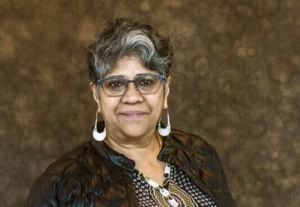
Who Is Radhika Balakrishnan?
Radhika Balakrishnan is a Professor Emeritus at Rutgers University, where she taught Women’s, Gender, and Sexuality Studies from 2009 to 2024. “Emeritus” usually suggests someone has stepped back, but that doesn’t seem to be the case here. Balakrishnan remains active, regularly aligning herself with the same academic and activist networks. Outside Rutgers, she serves on the board of the Global Initiative for Economic, Social, and Cultural Rights and participates in global policy discussions. That gives her a platform, and she continues to use it.
She repeatedly signs petitions, statements, and letters that promote boycott efforts and pressure universities to adopt similar positions. At a certain point, it becomes fair to ask whether this reflects academic analysis or something closer to advocacy.
How Has Radhika Balakrishnan Pushed Campus Activism?
Radhika Balakrishnan’s activity follows a consistent pattern. During major events, coordinated statements circulate, and her name appears alongside the same networks and claims. The messaging does not vary much, and the direction is always the same.
- May 2024 – she signed a letter accusing Israel of “genocide,” while also supporting pro-terror campus encampments and endorsing elements of the BDS movement. It also framed federal investigations into antisemitism as ploys, and urged universities to “legally contest—not capitulate to—the current White House administration’s alarming political campaign against institutions of higher education.”
- April 2024 – she signed a global academic petition defending Professor Nadera Shalhoub-Kevorkian after her arrest for inciting violence in Jerusalem, presenting the issue as one of academic freedom while opposing accountability tied to her statements. The petition described Israel as “a society infused with open genocidal incitement and discourse.”
- April 2024 – she signed an open letter condemning Israel’s actions in Gaza as systematic attacks on education and calling for ceasefire and reconstruction.
- November 2023 – Balakrishnan signed a statement by feminist and gender studies scholars calling to stop what they described as “genocide,” end Israeli control, and support Palestinian “liberation.” The statement was published in Jadaliyya online, which is co-edited by fellow Rutgers faculty member Noura Erakat.
- October 2023 – Radhika Balakrishnan signed an open letter criticizing Rutgers’ president for what was described as a “one-sided” response to the Israel-Hamas war.
- May 2021 – Balakrishnan signed a Rutgers faculty letter condemning Israel’s military actions and describing them as settler-colonial policies, stating “we demand an end to US’ long-standing military, economic, and diplomatic support for unchecked Israeli anti-Palestinian violence.”
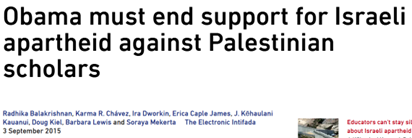
- September 2015 – she co-authored an article on Electric Intifada claiming Israel operates an “apartheid” system and urging the U.S. government to reconsider its support.
How Long Has Radhika Balakrishnan’s Been Participating In Academic Activism?
This pattern did not begin recently. Radhika Balakrishnan has been involved in academic activism campaigns for over a decade, often centered around petitions and institutional pressure efforts. Her approach remains consistent, even as the specific issues change.
Conclusion: What Does Radhika Balakrishnan Mean for Rutgers University?
Radhika Balakrishnan’s record shows a clear and consistent direction. Her repeated support for boycott efforts, and participation in faculty pressure campaigns all contribute to the larger campus environment. This matters when universities like Rutgers operate under Title VI obligations, which require them to address discrimination, including antisemitism tied to shared ancestry. When faculty consistently promote one-sided narratives without addressing those implications, it raises questions about how that environment is shaped. Balakrishnan may no longer be teaching full-time, but her influence remains present through the networks and positions she continues to support.