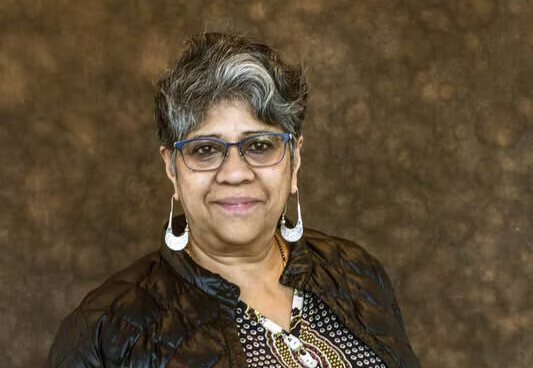
Samantha Jaser, a former New York University (NYU) official, has been directly tied to spreading antisemitism and promoting dangerous conspiracy theories in the aftermath of Hamas’s October 7, 2023 terror attacks. Her public statements on social media denied Hamas atrocities, recycled antisemitic tropes, and fueled hostility on campus at a time when Jewish students already faced a climate of fear and intimidation.
Antisemitic Conspiracies and Hate Speech
On January 15, 2024, screenshots surfaced of Jaser’s Instagram Stories, in which she accused Zionists of “organ harvesting from our loved ones’ corpses.” This echoes centuries-old antisemitic blood libels that portray Jews as desecrating bodies, rhetoric that has been used to incite violence against Jews across generations.
In another post, she dismissed credible reports of babies murdered and beheaded during Hamas’s October 7 attacks, claiming Israel fabricated these atrocities to gain support. By denying these war crimes, Jaser aligned herself with a dangerous form of Hamas apology that mirrors Holocaust denial in its rejection of documented evidence of Jewish suffering.
She also shared a Mondoweiss article denying that Hamas committed sexual assaults during the massacre, adding her own commentary that described such reporting as “Zionist propaganda.” Her post compared these verified atrocities to false rape allegations against Black men in the U.S., trivializing both historic lynching and the October 7 victims.
Campus Role and Backlash
At the time of her posts, Jaser was serving as director of undergraduate operations and special events at NYU’s Tandon School of Engineering. Within 24 hours of her comments surfacing, her staff profile was removed from the Tandon website, highlighting the university’s swift effort to distance itself from her rhetoric.
Jaser’s history of activism extends back to her involvement with the Palestinian Youth Movement (PYM) in 2017, a group known for promoting radical anti-Israel positions. Her trajectory from student activist to university official demonstrates how antisemitic and extremist narratives have migrated from the margins of activism into institutional spaces, impacting campus culture and student safety.
Conclusion
Samantha Jaser’s public denial of Hamas atrocities and use of antisemitic conspiracy theories underscore the deep challenges facing universities like NYU. By platforming hate and casting Jewish suffering as “propaganda,” she contributed to a campus climate where antisemitism is normalized and Jewish students are left vulnerable. Her case is a reminder that accountability is essential to protecting campus integrity and ensuring hate speech does not masquerade as legitimate political discourse.