
For years, universities treated campus chaos as just another part of academic life. Protest encampments, radical slogans, and faculty activism were often dismissed as a “free exchange of ideas” with administrators issuing statements about dialogue and hoping the controversy would pass. But as incidents involving harassment, intimidation, and extremist rhetoric spread across campuses, the federal government has begun asking a far more serious question: are universities actually enforcing civil rights law? Or do schools need real federal consequences for campus antisemitism and extremism?
That question is now driving a wave of Title VI investigations by the U.S. Department of Education. And for universities that rely on billions of dollars in federal research grants, contracts, and student aid…the stakes are far from symbolic. Investigations can affect funding, accreditation, enrollment, research programs, and the reputations institutions have spent decades building.
Federal Consequences for Campus Antisemitism and Extremism Are Growing
Federal regulators are increasingly investigating universities under Title VI of the Civil Rights Act of 1964, which prohibits discrimination at institutions receiving federal funding. Universities that accept federal grants, student aid, or research contracts are legally required to ensure students are not subjected to discrimination based on race, national origin, or shared ancestry. That includes antisemitism. The Department of Education’s Office for Civil Rights (OCR) has the authority to investigate complaints and determine whether universities failed to respond when students faced harassment, intimidation, or exclusion from academic activities. Doing so can result in federal consequences for campus antisemitism.
The scrutiny is happening alongside a sharp rise in reported antisemitic incidents on campus. According to data compiled by Hillel International and partner organizations, 2,334 antisemitic incidents were recorded on U.S. college campuses during the 2024–2025 academic year – the highest number ever documented since tracking began in 2019. Federal investigators are now examining whether universities adequately addressed these incidents, or whether administrators ignored harassment complaints, tolerated hostile environments, or failed to enforce their own policies.
Specific Campuses Under Scrutiny
Several high-profile universities have become central to the national debate. At Columbia University, internal reports found that many Jewish students reported feeling uncomfortable or unsafe expressing their views on campus following the October 2023 Hamas attacks and the protests that followed. The university’s antisemitism task force surveyed hundreds of students and documented incidents ranging from harassment in dormitories to hostility in classrooms, not to mention violent incidents that required law enforcement presence.

Other universities have also faced federal investigations or congressional scrutiny, including Northwestern University and Portland State University, where the Department of Education opened probes into reports of widespread antisemitic harassment. Meanwhile, institutions such as Harvard, Yale, Cornell, and Princeton have drawn criticism in national reports assessing how universities respond to antisemitism, with several receiving mediocre or failing grades in external evaluations of campus climate and administrative responses.
These investigations reflect a larger shift in how the federal government views campus discrimination complaints: universities are increasingly expected to prove that they are actively enforcing civil rights protections, not simply issuing toothless statements. Otherwise, there can be federal consequences for campus antisemitism.
Federal Funding Is Now Part of the Conversation
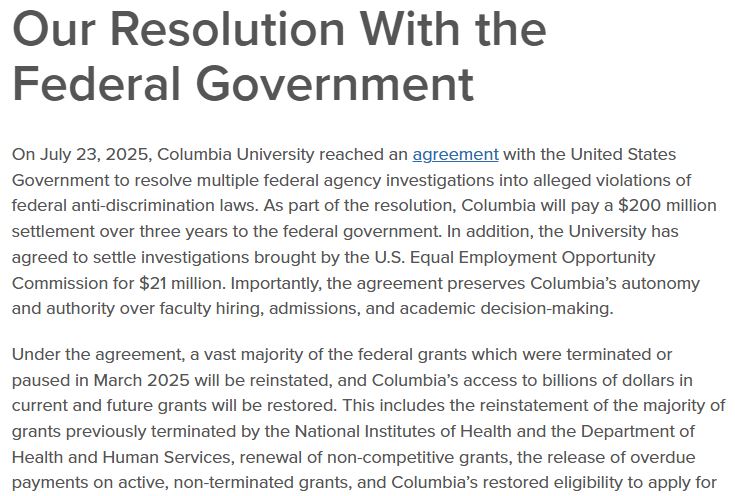
Research grants, federal contracts, and student aid programs contribute billions of dollars annually to universities across the country. In many cases, entire research programs depend on access to federal support. That is why investigations tied to federal consequences for campus antisemitism and extremism quickly move beyond public relations concerns. The potential financial consequences are not theoretical. Columbia University, for example, reached a major settlement with federal authorities – to the tune of $221 million – after research grants were canceled amid antisemitism investigations, forcing the university to implement policy changes and disciplinary reforms.
Accreditation and Institutional Legitimacy
Federal investigations can also raise questions about a university’s accreditation status. Accreditation agencies evaluate whether institutions meet academic and governance standards required to participate in federal financial aid programs. When federal regulators identify serious civil rights concerns, accrediting bodies may be notified. While the loss of accreditation is rare, even the possibility can create serious concern for universities. Without accreditation, students cannot access federal student aid. That means fewer applicants, declining enrollment, and significant damage to institutional credibility.
Reputation, Enrollment, and Institutional Change
Federal investigations rarely remain quiet. Once an investigation begins, universities often find themselves at the center of national media coverage and political scrutiny. Parents, prospective students, alumni, and donors begin asking difficult questions about campus safety and leadership. In a competitive higher-education environment, reputation matters. When institutions become associated with repeated reports of campus hostility or extremist rhetoric, that reputation can begin to erode and show cracks everywhere from enrollment decisions to faculty recruitment and research funding.
A Turning Point for Higher Education
The growing number of investigations shows that federal regulators are taking a more active role in evaluating how universities respond to discrimination and extremist activity on campus. Universities must enforce civil rights protections not just in bland statements, but in practice. The message is increasingly clear: environments that tolerate discrimination, intimidation, or extremist conduct may now face federal consequences for campus antisemitism that extend far beyond the quad.
FAQ
What federal consequences can universities face for campus antisemitism?
Universities investigated under Title VI may face compliance agreements, federal oversight, or reviews of federal funding. In severe cases, institutions risk losing research grants or other federal support if they fail to address discrimination on campus.
What is a Title VI investigation?
A Title VI investigation is conducted by the U.S. Department of Education to determine whether a university receiving federal funding allowed discrimination based on race, national origin, or shared ancestry.









