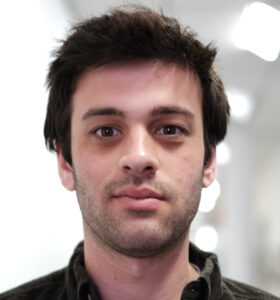
Who Is Charles Gelman?
Charles Gelman is a lecturer at New York University’s Gallatin School who went viral after being filmed ripping down posters of Israelis kidnapped by Hamas after October 7th. The incident quickly turned him into another example of how anti-Israel activism on elite campuses increasingly spills far outside the classroom. Since then, Gelman has aligned himself with anti-Israel protest movements, boycott campaigns targeting Israeli universities, and faculty statements defending disruptive campus activism while Jewish students report rising hostility and intimidation.
Why Was Charles Gelman Tearing Down Hostage Posters?
Charles Gelman drew national backlash in December 2023 after being filmed ripping down posters showing civilians kidnapped by Hamas, including children and elderly civilians. When confronted on camera in Midtown Manhattan, Gelman justified the act by attacking Israel’s “vicious and brutal occupation” over the past 75 years. The obvious problem: the posters were about kidnapped civilians, not Israeli government policy.
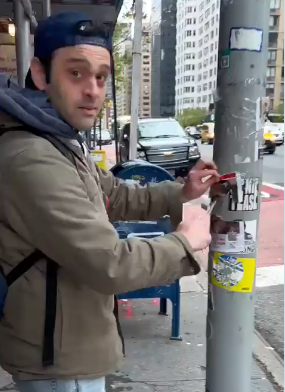
Gelman’s actions are a reflection of a larger trend after October 7th, where activists across campuses and major cities vandalized or removed hostage posters while insisting they were acting in the name of “justice.” Apparently even pictures of kidnapped civilians became unacceptable if the victims were Israeli.
How Has Charles Gelman Participated in Anti-Israel Activism at NYU?
Charles Gelman’s activism didn’t stop with the hostage poster incident. Throughout 2024, he repeatedly aligned himself with organized anti-Israel faculty campaigns and protest movements tied to NYU.

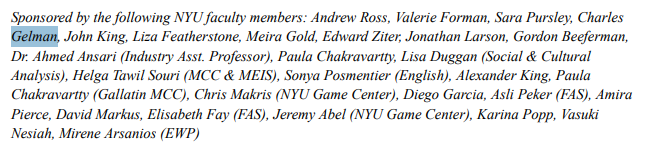
The pattern is hard to miss. Calls for “academic freedom” somehow only seem to apply in one direction. Faculty activists defended disruptive protests at American universities while supporting boycotts meant to isolate Israeli academics and institutions. The overlap between these campaigns and activism seen at Columbia University, Harvard University, and University of Pennsylvania also shows how coordinated these faculty networks have become across campuses.
Conclusion: Why Is Charles Gelman Still At NYU?
Charles Gelman became nationally known because he was filmed ripping down posters of kidnapped civilians and defending it with anti-Israel talking points. Since then, his activism has consistently aligned with movements portraying Israel as uniquely illegitimate while downplaying Hamas terrorism and dismissing concerns from Jewish students. For NYU, this is bigger than one lecturer with strong political opinions. Universities receiving federal funding have obligations under Title VI to address hostile campus environments affecting Jewish students. When faculty publicly participate in conduct seen as hostile toward Jewish identity, Zionism, or Israeli victims of terrorism, universities risk normalizing intimidation under the label of activism. That is a dangerous message for a school already facing growing scrutiny over campus antisemitism.