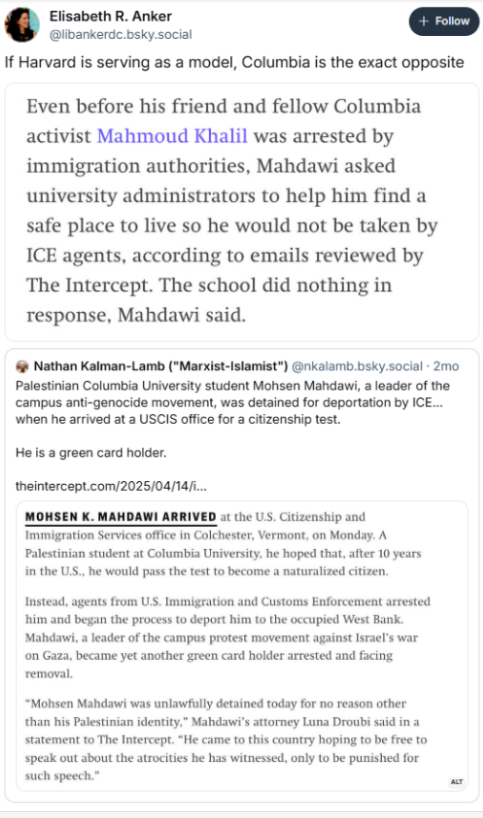
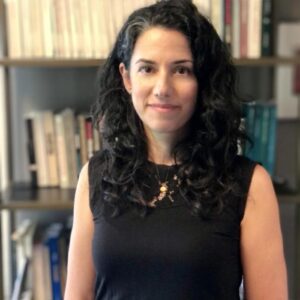
Who Is Elisabeth Anker?
Elisabeth Anker is a professor of American Studies and Political Science at George Washington University, where she also directs the Film Studies Program. She is the author of Ugly Freedoms, a book arguing that freedom can be dangerous when used to defend the wrong causes. Apparently, liberty is fine, as long as it passes the faculty review board.
How Has Elisabeth Anker Supported Pro-Palestinian Campus Activism?
Anker has done more than offer supportive commentary from a safe academic distance. She has publicly defended pro-Palestinian encampments and physically joined efforts to shield demonstrators when police or counter-protesters were expected.
- February 2025 – at GWU’s “Unsettled Labors: Migrant Caregivers in Palestine/Israel” event, she argued that international law and human-rights frameworks can be used to delegitimize Palestinian “resistance” while giving legal cover to Israeli state actions.
- May 2024 – In comments to The Georgetown Voice, Anker defended campus encampments as part of democratic debate. “Protests and counter-protests are part of First Amendment freedoms,” she said, adding that students were trying to create a dialogue. She also helped form a human chain around demonstrators when activists expected police or counter-protester intervention. So some freedoms are “ugly,” but encampments apparently qualify as the premium version?
What Is Elisabeth Anker’s Record on Israel?
Anker’s interviews, campus events, and petition history have repeatedly framed Israel through the language of occupation, colonialism, apartheid, and Palestinian resistance. This is not one stray signature buried in an old faculty letter. It is a pretty consistent pattern.
- July 2025 – Anker signed an “Urgent Message” from Jewish faculty connected to CUNY, Berkeley, and Georgetown calling on universities to reject government policies that equate criticism of Israel with antisemitism.
- April 2024 – she signed an open letter from faculty and staff across Washington, D.C., Maryland, and Virginia supporting the encampments at George Washington University as “anchored in a clear moral compass in the face of Israel’s genocidal campaign against the Palestinians in Gaza through mass killing, widespread destruction, and other acts.”
- February 2024 – joined a Harvard affiliates call for an immediate ceasefire to end what the letter described as relentless violence in Gaza and the West Bank, saying they “deeply empathize with the suffering of the Palestinian people during decades of occupation.” The letter was also signed by Harvard professor Vijay Iyer.
- March 2021 – on a podcast, Anker interviewed Mahmood Mamdani, who argued that the colonial project that created the United States helped make genocide “doable and thinkable” for Adolf Hitler and later influenced the creation of Israel.
- August 2019 – she supported an academic-boycott resolution within the American Political Science Association which accused Israeli academic institutions of complicity in “settler colonization,” “ethnic cleansing,” “dispossession,” “military occupation,” and “apartheid policies.”
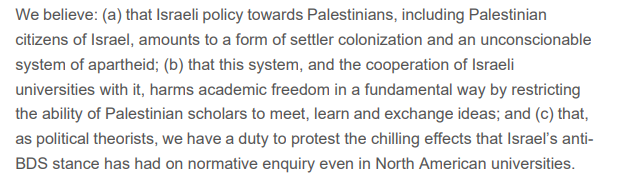
The pattern isn’t exactly subtle. Anker has repeatedly backed campaigns and boycott efforts that paint Israel as the aggressor, the villain, and the side in the wrong over and over again.
Where Else Has Elisabeth Anker Appeared?
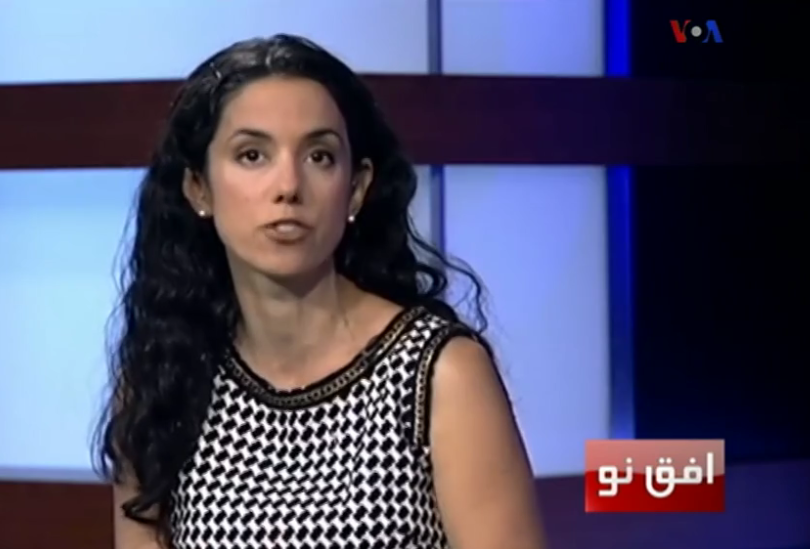
Anker has written for outlets including The New York Times and appeared as a commentator on Al Jazeera, CNN, and the BBC. Her political arguments are not confined to the classroom. She also appeared on Iranian state television in April 2016 to discuss the U.S. presidential election. That’s certainly one way to broaden the media resume.
Why Does Elisabeth Anker’s Role at GWU Matter?
Anker’s scholarship, media work, petition activity, and campus activism all point in the same direction. She calls some uses of freedom oppressive, while defending encampments and helping form a protective line around protesters. She attacks conservative freedom rhetoric as anti-democratic, while supporting academic boycotts and opposing groups that track anti-Israel activism.
She is entitled to those views. But the detached-professor routine gets harder to maintain when the scholarship, activism, petitions, and public commentary all sound like parts of the same campaign. At GWU, students are not just getting political theory. They’re getting a professor whose definition of acceptable freedom appears to depend heavily on who is using it.