
A recent political controversy involving Rama Duwaji, wife of New York City mayor Zohran Mamdani, has drawn renewed scrutiny to the rhetoric and activism of Susan Abulhawa. The story began when reporting revealed that Mamdani’s wife, Rama Duwaji, created an illustration for an essay written by Abulhawa. What might normally have been a minor editorial detail quickly escalated into a broader political controversy once observers began revisiting Abulhawa’s long record of inflammatory public statements.
At first glance, the connection appeared straightforward. Rama Duwaji is a professional illustrator whose work appears in magazines and cultural publications. Freelance illustrators frequently contribute artwork to essays written by authors they have never met. However, the situation quickly became controversial because of the author whose essay the illustration accompanied. Susan Abulhawa has built a reputation not only as a novelist and activist but also as a highly polarizing voice in debates surrounding Israel, antisemitism, and political violence.
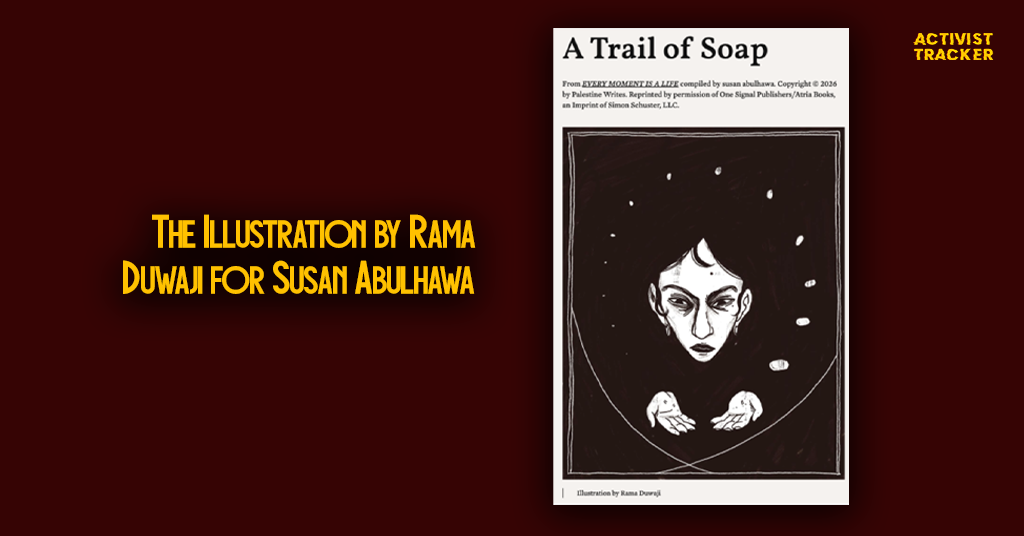
For critics who have followed Abulhawa’s commentary for years, the revelation that Rama Duwaji illustrated a piece connected to her writing served as a catalyst for renewed scrutiny. Organizations that monitor extremist rhetoric in activism, including Activist Tracker, have documented numerous examples of statements and social media posts from Abulhawa that critics argue celebrate violence, repeat antisemitic tropes, and frame attacks against Israeli targets as legitimate acts of resistance. Once the illustration credit became public, those examples quickly resurfaced and began circulating widely online.
How Rama Duwaji’s Illustration Brought Susan Abulhawa Back Into the Spotlight
The controversy began after it was reported that Rama Duwaji illustrated an essay written by Susan Abulhawa in the magazine Everything Is Political, a publication associated with the activist nonprofit Slow Factory. The magazine presents itself as a cultural platform exploring political issues through essays, art, and commentary. In this case, the essay was accompanied by an illustration created by Duwaji.
According to statements from City Hall, Rama Duwaji was hired as a freelance illustrator by the publication and had no personal relationship with Susan Abulhawa. A spokesperson for Zohran Mamdani emphasized that the work was simply a professional commission and not a political collaboration between the two women. In other words, the illustration was part of a standard editorial process rather than an activist partnership.
Despite that explanation, the story gained traction because of Abulhawa’s controversial reputation. Once it became widely known that the essay had been illustrated by the wife of a major political figure, critics began examining Abulhawa’s public statements in detail. The connection between Rama Duwaji and Susan Abulhawa therefore became the spark that reignited debate over Abulhawa’s rhetoric and activism.
The situation was further amplified by the fact that Mamdani himself is a high-profile political figure who has built his career within progressive activist circles. That context made the story more politically charged than a typical cultural publication credit would have been.
Susan Abulhawa’s Record of Inflammatory Rhetoric
Susan Abulhawa is a Palestinian American novelist and activist whose work often focuses on the Israeli-Palestinian conflict. Over the years she has become a prominent voice among activists who support Palestinian causes and oppose Israeli government policies. However, her rhetoric has repeatedly sparked controversy because of the language she uses when discussing Jews, Israelis, and Zionism.
Critics argue that Abulhawa’s commentary frequently goes far beyond policy criticism and instead relies on imagery and language that dehumanizes Jews. Over time she has posted statements referring to Jews or Israelis using terms such as “vampires,” “ghouls,” and “demons.” Observers have pointed out that this kind of language echoes historical antisemitic stereotypes that portrayed Jews as monstrous or parasitic figures.
The backlash intensified after the Hamas attacks on Israel on October 7, 2023. In commentary written shortly after the attacks, Abulhawa described the event as a “spectacular moment that shocked the world.” For many critics, describing a massacre that killed more than a thousand civilians in those terms appeared to glorify the violence rather than condemn it.
Activist Tracker has documented numerous additional posts by Susan Abulhawa that critics say appear to celebrate violence or justify attacks carried out by militant groups. These include posts that frame the October 7 attacks as legitimate resistance and statements expressing sympathy for individuals associated with militant organizations.
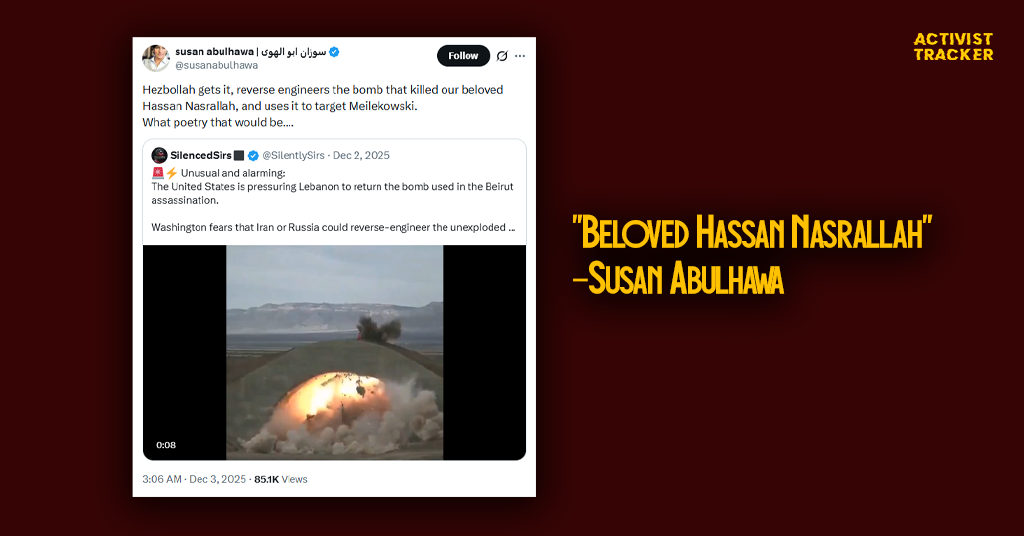
In another example that circulated widely online, Abulhawa posted commentary after a deadly attack targeting Israeli officials in Washington, D.C. Critics argued that her reaction framed the violence in sympathetic terms rather than condemning it outright.
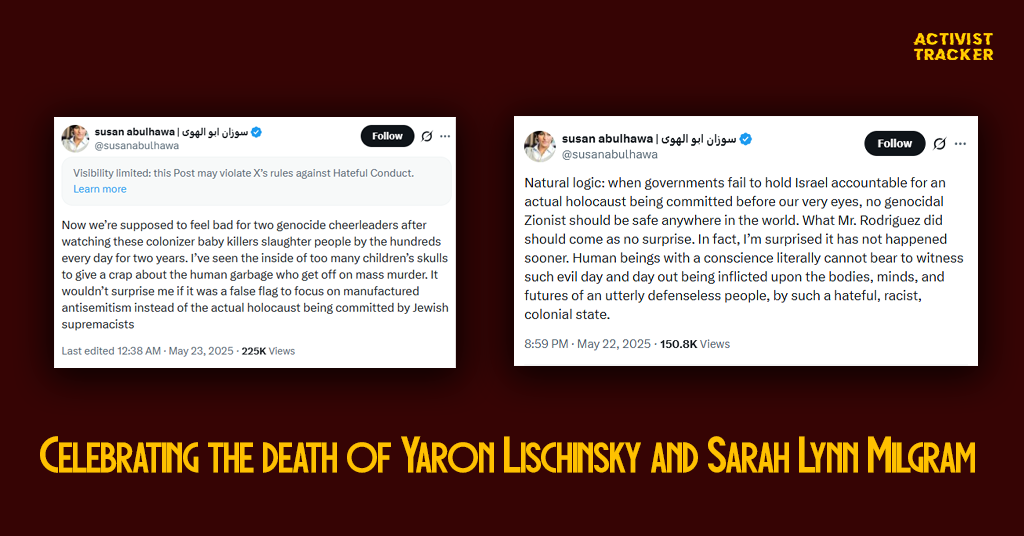
Taken together, these statements have led many observers to argue that Abulhawa’s rhetoric consistently crosses the line from political advocacy into language that normalizes violence and hatred.
Mamdani’s Response and Defense of Rama Duwaji
Because the controversy involved the wife of the New York City mayor, Zohran Mamdani was quickly asked to respond. Mamdani publicly condemned the rhetoric associated with Susan Abulhawa and described her language about Jews as unacceptable. He also reiterated that the October 7 attacks were horrific acts of violence and should be condemned unequivocally.
At the same time, Mamdani defended his wife and emphasized that Rama Duwaji had simply completed a freelance illustration assignment. According to his office, Duwaji did not collaborate with Abulhawa directly and had no personal relationship with her. The mayor’s response appeared designed to create distance between his political office and the activist rhetoric that had resurfaced during the controversy.
However, the situation remained complicated because critics were already scrutinizing Duwaji’s own social media activity. Some observers pointed to posts and interactions that they interpreted as sympathetic to anti-Israel activism, arguing that the illustration controversy was not occurring in isolation but rather within a broader pattern of political messaging.
As a result, Mamdani found himself attempting to navigate a delicate balance. On one hand he condemned Abulhawa’s rhetoric. On the other hand he continued defending his wife while critics argued that the broader activist ecosystem surrounding both figures deserved closer examination.
Susan Abulhawa Responds and Escalates the Dispute
Susan Abulhawa did not remain silent after Mamdani’s comments. Instead, she posted a video response on social media attacking the mayor’s criticism. In the video and accompanying posts, Abulhawa accused Mamdani of capitulating to what she described as “Zionist power.” She suggested that Mamdani had distanced himself from her statements in order to avoid political backlash.
The response quickly circulated online and escalated the controversy even further. Supporters of Abulhawa criticized Mamdani for condemning her rhetoric rather than defending her, arguing that political leaders frequently abandon activists when controversy emerges. Critics of Abulhawa, meanwhile, pointed to the episode as another example of the extreme rhetoric that has long surrounded her activism.
The dispute quickly took on the character of a public feud. Individuals who broadly share similar political views began criticizing one another, competing to define who represented the more authentic position within the activist movement.
Observers noted that this kind of internal conflict has become increasingly common within online activist communities, where ideological purity tests and public denunciations often dominate debate.
Why the Susan Abulhawa Controversy Matters
The renewed attention surrounding Susan Abulhawa highlights a broader problem facing modern political discourse. Social media allows activists to build large audiences and shape narratives quickly, but it also allows extreme rhetoric to spread widely without the filters that once existed in traditional media.
Statements that might once have circulated primarily within activist circles can rapidly become national political issues when they intersect with prominent public figures. In this case, a single illustration credit involving Rama Duwaji was enough to bring years of controversial statements from Susan Abulhawa back into the spotlight.
For organizations such as Activist Tracker, which monitor extremist rhetoric and activism, the controversy illustrates how inflammatory language can move from niche activist spaces into mainstream political debate. Once those connections become visible, political leaders often find themselves confronting questions about the broader networks and movements surrounding them.
The debate surrounding Susan Abulhawa therefore extends beyond one essay or one illustration. It reflects an ongoing struggle over the boundaries of political rhetoric, the normalization of extreme language, and the responsibility of public figures when those debates spill into the public arena.









