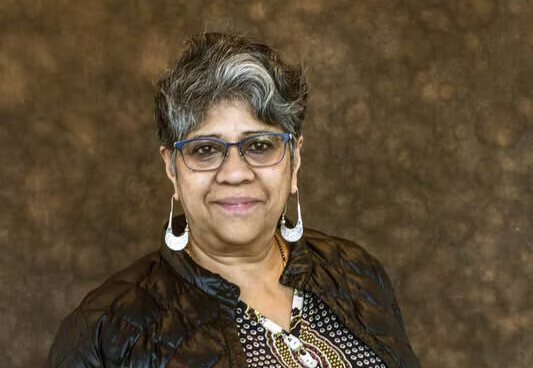
Who Is Huda Fakhreddine?
Huda Fakhreddine is an Associate Professor of Arabic Literature at the University of Pennsylvania whose public profile over the last several years has looked a lot more like that of a political activist than a scholar. Most professors at least try to keep some distance between their academic work and their politics. Fakhreddine seems to have skipped that step.
At this point, it would probably be easier to list the major Penn controversies she has not been involved in. From encampments and building takeovers to open praise for October 7th, lawsuits, and congressional investigations into antisemitism, her name keeps popping up in the same fights. For someone hired to teach Arabic literature, she sure spends an awful lot of time in the middle of campus activism.
She was reportedly on leave from Penn for the 2025–2026 academic year.
How Was Huda Fakhreddine Involved in the Palestine Writes Festival?
According to the organizers, Palestine Writes was all about literature, poetry, and culture. But according to many Jewish students, alumni, and federal lawmakers, that was only part of the story. The festival became one of Penn’s biggest post-October 7th headaches and eventually caught the attention of Congress.
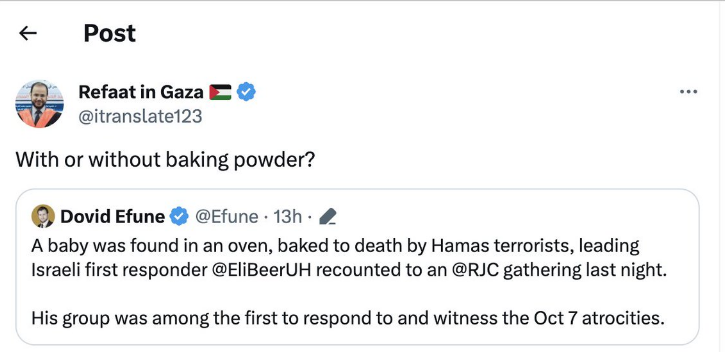
Huda Fakhreddine helped organize the September 2023 Palestine Writes Festival alongside Susan Abulhawa, a writer known for regularly calling Jews cockroaches, vampires, and parasites. For a festival that supposedly had nothing to do with antisemitism, the guest list kept creating antisemitism problems. One participant, Refaat Alareer, later drew outrage for comments that mocked the murder of Jewish children during the October 7th attacks.
The festival ultimately became one of the examples cited by the House Committee on Education and the Workforce during its investigation into antisemitism at Penn.
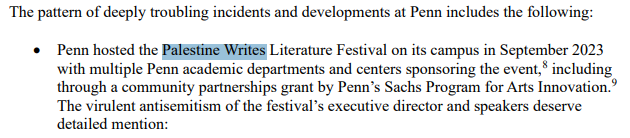
Years later, Fakhreddine continued defending the event. In a May 2026 interview, she argued that critics had unfairly portrayed Palestine Writes, insisting, “It was a literature festival. It was a cultural event. There was music, food, children’s literature, poetry.” In the same article, she also claimed that television producer Dick Wolf had based an antisemitic and homicidal professor in an episode of Law & Order on her. Could that be projection?
How Has Huda Fakhreddine Talked About Israel and Gaza?
If there is one thing Fakhreddine likes to do, it’s weigh in on Israel. The results have not exactly been subtle.
- October 2025 – Huda Fakhreddine published an essay titled “Israel Killed Our Storytellers, But it Can’t Kill Our Stories.” The piece defended Palestinian writers and journalists, including Anas al-Sharif, whom Israel accused of ties to Hamas. It was later included in Gaza: The Story of a Genocide, edited by Sonia Faleiro and Fatima Bhutto. After al-Sharif was killed in an Israeli airstrike, Fakhreddine described it as a “targeted hit on a journalist’s tent outside Al-Shifa hospital.”
- October 2023 – at a rally alongside fellow faculty members Eve Troutt Powell, she stated “Israel is the epitome of antisemitism…it desecrates the memory of the Holocaust victims. It humiliates every Jewish person.”
- October 2023 – Ten days after Hamas’s October 7th attack, Huda Fakhreddine posted, “Israel is antisemitic, anti-human, anti-children, anti-life!”
- October 2023 – As the deadliest massacre of Jews since the Holocaust unfolded, Huda Fakhreddine posted, “While we were asleep, Palestine invented a new way of life.” Anyone looking for sympathy toward the victims in that post is going to have a hard time finding it.
How Has Huda Fakhreddine Encouraged Campus Activism at Penn?
Posting online is not enough. Fakhreddine has also spent plenty of time promoting protests, defending disruptive demonstrations, and rallying support for activist causes.
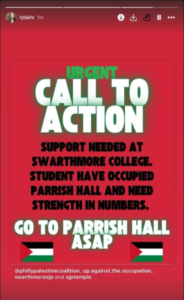
- February 2025 – Fakhreddine promoted an ongoing Students for Justice in Palestine (SJP) occupation at Swarthmore College, sharing an “URGENT CALL TO ACTION” that instructed followers to “GO TO PARISH HALL ASAP.” Following campus rules clearly was not the priority. Getting more people to the occupation was.
- October 2024 – she encouraged students to join a “Strike for Palestine and Lebanon” and a “Global Strike for the Resistance,” publicly backing activist campaigns built around direct action and disruption.
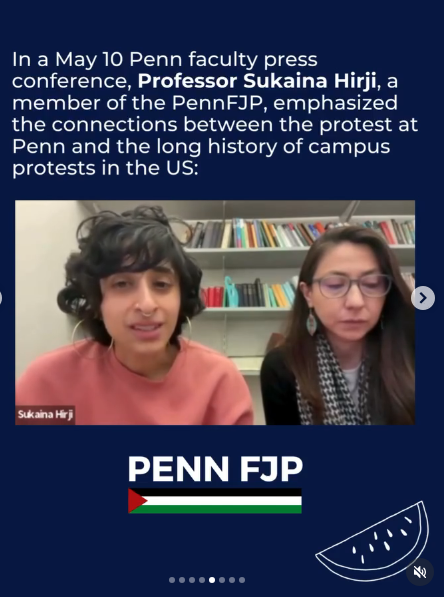
- May 2024 – speaking on behalf of Penn Faculty and Staff for Justice in Palestine (FSJP) alongside fellow Penn faculty member Sukaina Hirji, Huda Fakhreddine defended Penn’s encampment. She described the protesters’ demands as “clear, just, and reasonable” while accusing the university of “caving under the pressure of donors and outside lobbyists.” Missing from her remarks was any acknowledgment of why many students and faculty viewed the encampment as part of a growing hostility problem on campus.
Like a lot of activist professors at Columbia, Harvard, and NYU, Fakhreddine doesn’t seem content sitting on the sidelines.
Why Did Huda Fakhreddine Sue the University of Pennsylvania?
Then Congress got involved. When lawmakers started looking into antisemitism at Penn, Fakhreddine was not exactly thrilled. Instead of welcoming the scrutiny in an effort to fight antisemitism, she joined a lawsuit that sought to stop the university from turning over documents requested by the House Committee on Education and the Workforce. When questions were raised about the activist world surrounding Palestine Writes, Fakhreddine seemed far more interested in fighting the investigation than answering the questions.
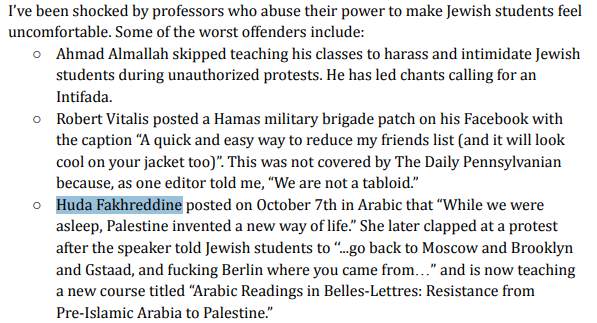
This came after Fakhreddine was specifically named in Congressional testimony from student Noah Rubin in February 2024, where he stated that she was among the “worst offenders”, alongside her own husband, Ahmad Almallah, of professors who abused their power when it came to Jewish students:
Has Huda Fakhreddine Faced Calls for Accountability?
Not everyone at Penn has been impressed by Fakhreddine’s activism. Students, alumni, and outside critics have repeatedly questioned whether someone so involved in political causes can stay objective in the classroom.
Conclusion: What Does Huda Fakhreddine Mean for the University of Pennsylvania?
For years, Huda Fakhreddine has blurred the line between professor and activist. Whether it’s Palestine Writes, campus takeovers, strikes, or lawsuits, she keeps popping up alongside the same activist networks making the same arguments.
Penn can make up its own mind about whether this is what faculty leadership looks like. Students can make up their own minds about whether someone this invested in a political movement can realistically approach controversial topics with an open mind.
But after October 7th, universities across the country promised to take concerns about antisemitism more seriously. Looking at Fakhreddine’s record, critics have every reason to ask whether Penn ever intended to follow through when the controversy involved its own faculty. If Penn is still wondering why so many people lost confidence in its handling of antisemitism, the answer might be closer than administrators would like to admit.