Who Is David Lurie?
David Lurie, Associate Professor of Japanese History and Literature at Columbia University, is not just another professor with strong opinions. He’s been one of the most visible faculty figures defending the wave of disruptive pro-Palestinian activism that has reshaped campus life since October of 2023. As former president of the Columbia chapter of the American Association of University Professors (AAUP), Lurie positioned himself as a gatekeeper of “academic freedom” while consistently backing and supporting protests that sparked widespread complaints of isolation and harassment aimed at Jewish students.
When professors become activists first, what happens to the students stuck in the middle?
How Has David Lurie Defended Disruptive Campus Protests?
Lurie didn’t just comment on Columbia’s protest wave. He helped legitimize it, then doubled down when students pushed back legally. From public statements to legal positioning, his role consistently framed protest activity as protected, even when it disrupted core university functions and involved law enforcement.
- January 2025 – the Columbia-AAUP, with David Lurie involved, filed to dismiss a lawsuit brought by Jewish students impacted by the encampments, labeling it a “meritless SLAPP suit” and seeking sanctions against the plaintiffs’ legal team.
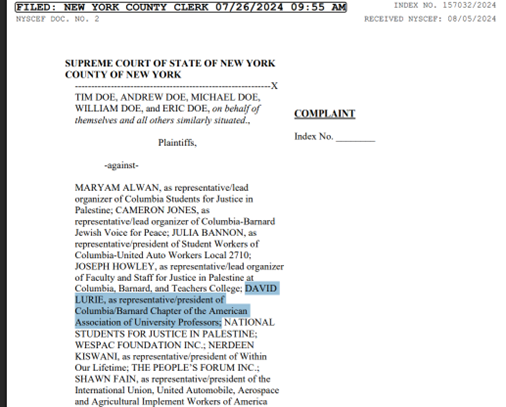
- July 2024 – Lurie was identified in a class-action lawsuit in his AAUP role as part of a network that allegedly conspired to encourage protest activity that disrupted classes, canceled graduation ceremonies, and restricted campus access, leading to a hostile environment for Jewish students.
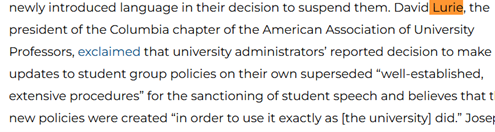
- May 2024 – as AAUP chapter president, David Lurie led a faculty vote of no confidence in Columbia leadership “as personified by” President Minouche Shafik, arguing the administration had made a “series of mistakes” in responding to protests. The vote stated that it was in reference to “our feelings about the…potential for positive action in the future.”

- April 2024 – during a faculty walkout, Lurie publicly read a statement condemning the suspension and arrest of student protesters, framing enforcement actions as unjustified.
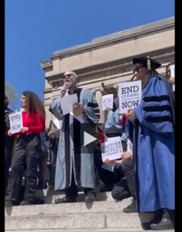
- November 2023 – at a faculty protest over the suspension of groups like Students for Justice in Palestine (SJP) and Jewish Voice for Peace (JVP), David Lurie criticized Columbia for disciplining them instead of engaging with their demands. Also present at the protest was Joseph Massad, a fellow Columbia professor who openly praised October 7th.

What Has David Lurie Said About Antisemitism and “Academic Freedom”?
Lurie has repeatedly positioned himself as a defender of free speech. But his version of “academic freedom” seems to come with a caveat: antisemitism concerns don’t count if they interfere with activism.
- April 2024 – David Lurie signed a letter from Jewish faculty to Columbia President Shafik ahead of her appearance before Congress warning against what they described as the “weaponization of antisemitism” in response to campus protests. They described the Congressional hearing itself as being based on “false narratives that frame these proceedings.”
- April 2024 – in an interview with The Washington Post, David Lurie criticized the suspension of Columbia’s chapters of Students for Justice in Palestine (SJP) and Jewish Voice for Peace (JVP), presenting them as victims of administrative overreach rather than contributors to campus tensions and violent disruptions.
- December 2023 – in an AAUP open letter, Lurie joined claims of a “climate of intimidation” against those expressing views on the Middle East, framing disciplinary actions as censorship.

The pattern is consistent: when antisemitism complaints surface, Lurie reframes the issue as suppression of dissent instead of addressing the underlying hostility.
How Has David Lurie Aligned With External Advocacy Networks?
Lurie’s influence hasn’t stayed within Columbia. His statements and appearances have been amplified by organizations and events that push a clear political narrative about U.S. campuses.
- March 2025 – in a press release by the Council on American-Islamic Relations in response to Columbia “capitulating” to federal pressure over antisemitism, David Lurie was quoted as saying that the university bypassed established protocols in order to silence students.
- February 2025 – as a panelist at a University of Pittsburgh event titled “Global Perspectives on the Role of Faculty in an Age of Campus Repression,” Lurie promoted “global, historical and comparative conversation about strategies for maintaining campuses as vital spaces for faculty democracy and dissent during difficult times.”

These appearances position him not just as a professor, but as part of a larger system shaping how campus activism is defended and spread across universities.
Conclusion: What Does David Lurie Mean for Columbia University?
David Lurie represents a growing trend at Columbia: faculty who cross the line between scholarship and activism, then invoke “academic freedom” to shield the consequences. His leadership within the AAUP and alignment with groups like CAIR show how campus disputes are no longer internal, but part of a national advocacy network shaping the narrative. The ongoing lawsuit tied to the 2024 encampments raises serious questions about liability, student safety, and whether universities are meeting their obligations under federal civil rights protections, including Title VI. If students can plausibly argue they were denied equal access to education, that’s not just a campus issue, that’s a legal one. Columbia has to decide whether figures like David Lurie are protecting academic freedom or actively eroding the conditions that make it possible in the first place.










