The past two weeks brought significant developments in the fight against campus antisemitism and radicalism at four major universities. The leaves are turning, the pumpkin spice is flowing, antisemitism and radicalism on American campuses are not fading, and the institutions meant to confront them are still scrambling.
Harvard: $2.6 Billion Funding Fight Reaches Appeals Court
On October 5th, Harvard and the Trump administration faced off before the First Circuit Court of Appeals over the freeze of $2.6 billion in federal research grants. DOJ lawyer Michael Velchik argued the government has the authority to decide whether Harvard is doing “enough” to combat campus antisemitism: “At a certain point, we also get to decide what’s good enough for us.”
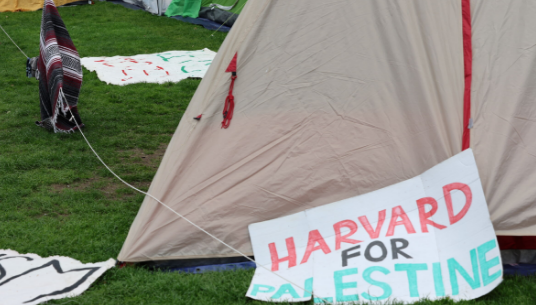
Judge Sandra Lynch noted the government terminated the funding “without an investigation, without a finding — just a notice: we’re going to terminate.” District Judge Allison Burroughs had previously ruled the government “used antisemitism as a smoke screen for a targeted, ideologically driven attack on this country’s leading universities.” The appeals court has not yet ruled.
What is not in dispute is that Harvard has a documented antisemitism problem. Jewish students have been spat on, heard “Heil Hitler” chanted, and watched classmates glorify terrorism. Even faculty members like Rosie Bsheer and Vijay Iyer have drawn scrutiny over antisemitism allegation.
The question before the court is whether defunding medical research is the appropriate remedy. That is a legal question. The antisemitism itself is a fact.
Rutgers: Federal Antisemitism Investigation Reopened
On October 2nd, it was reported that the Department of Education’s Office for Civil Rights is reopening an antisemitism investigation at Rutgers. Kenneth Marcus, the newly appointed assistant secretary for civil rights, referenced a pro-Palestinian activity in his letter. A previous civil rights chief had closed dozens of pending antisemitism investigations in 2025, drawing outrage from Jewish groups. Marcus’s arrival signals renewed enforcement – a helpful move in the face of faculty like David Letwin and Hamid Abdeljaber who perpetuate extreme antisemitic or anti-Zionist viewpoints on campus.
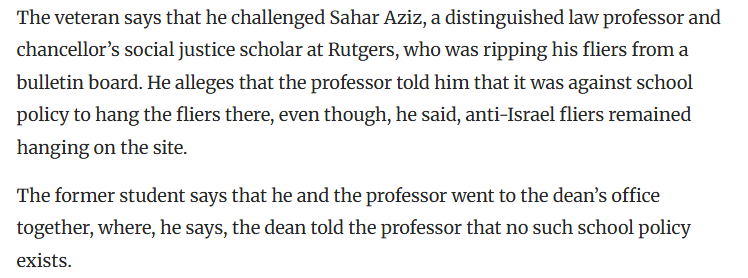
Separately, Rutgers is facing a lawsuit from Yiorgos Maravelias, a disabled Army veteran and former law student who alleges campus police arrested him during a May 2024 pro-Israel counterprotest while leaving anti-Israel encampment materials untouched. According to the amended complaint filed October 11th, a Rutgers law professor (Sahar Aziz of the CSRR) ripped his anti-Hamas fliers from a bulletin board, and administrators “disagreed with his political views and thought that he was Jewish, which he is not.”
The pattern here is one Jewish and pro-Israel students know well: speech rules applied unevenly, and the Jewish side left holding the short end.
Penn: Third Circuit Vacates Order Compelling Jewish Employee Records
On October 6th, the Third Circuit vacated a lower court order that would have required Penn to provide the EEOC with the names and contact information of Jewish employees as part of a campus antisemitism investigation. The EEOC had sought lists of Jewish organization members, contact details for Jewish studies staff, and de-anonymized listening session records.
Penn had called the demand “disturbing and unconstitutional,” comparing it to “government entities identifying and compiling information about Jews.” The EEOC withdrew the subpoena in July, but the AAUP continued the appeal and won.
Regardless, faculty members like Sukaina Hirji, Huda Fakhreddine, and Ahmad Almallah continue to spread anti-Zionist sentiment on campus.
NYU: October 7th Walkout
NYU students organized a walkout on the third anniversary of October 7th, coordinating with Columbia and CUNY and converging in front of City Hall. NYU’s student government formally joined the international BDS movement. Organizers reframed October 7th as the starting point of a “student intifada” rather than a day of mourning.
Calling for an intifada — a term that in context means armed uprising — is not political speech; it is a call to violence. The fact that a student government formally endorsed BDS, a movement whose leadership has repeatedly trafficked in antisemitic tropes, is not a sign of moral clarity.
NYU has adopted the IHRA definition of antisemitism, which critics say conflates anti-Zionism with anti-Jewish hatred. But let’s be precise: opposing Israeli government policy is not antisemitism. Glorifying Hamas and celebrating October 7th is. The line is not that hard to find (though faculty like Samantha Jaser and Marie Cruz Soto might disagree).
Where This Leaves Us on Campus Antisemitism and Radicalism
Four universities, four versions of the same failure. At Harvard, campus antisemitism is documented and real, and the legal fight over funding continues. At Rutgers, a student who tried to counter protest with anti-Hamas fliers got arrested while the encampment stayed put. At NYU, the student government signed onto BDS in the same news cycle.
Antisemitism on campus is real, it is dangerous, and it is being tolerated, excused, and in some cases celebrated. Radicalism is also real, and it is being dressed up as activism by people who should know better.
Jewish students do not need better branding. They need administrators with spines, faculty who enforce the same rules for everyone, and a serious response to the people actually threatening them. What is happening instead is that Jewish students at five of America’s most prestigious universities are watching the adults fight over them while the people menacing them face few consequences.
That is the story. It is not a both-sides story. It is a story about institutions that have failed, and a political class that has turned that failure into a game.